In a nutshell
- That is the window when you board at the pier in Kirkenes itself, which is the version of the trip most visitors book and plan their dates around.
- The season is about how the trip is run and where it starts, not about whether there are crabs on the seabed to catch.
- From late May to late July the sun stays above the horizon around the clock, so an afternoon departure happens in full daylight.
- July averages around fifteen degrees by day at the nearest long-record station, which is warmer than most people expect this far north.
What the season actually refers to
There is a useful distinction to draw at the start, because the phrase king crab season suggests something it does not mean here. It is not a fishing season in the sense of a window when the animal may be taken and a window when it may not. The red king crab is on the seabed in the Barents Sea throughout the year, and the commercial fishery works through the year.
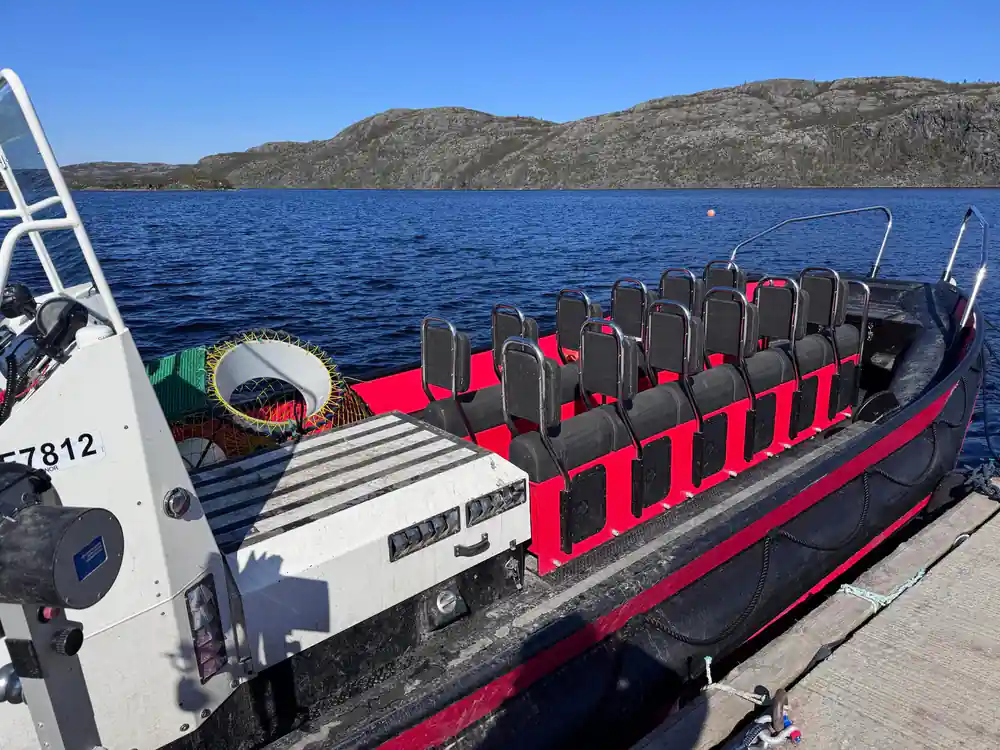
What the season describes on this trip is how the safari is run. Between May and the middle of September the boat leaves from the King Crab pier, in the town itself. Outside those months the starting point moves to the Snow Resort instead. So the question a visitor is really asking is not whether they have come at the right time for crab, but which version of the trip their dates will give them.
May, the light returning
May is the month when this part of Finnmark changes completely. Daytime temperatures climb to around seven degrees, which after a winter of sub-zero averages feels like a different country, and daylight is already up to nearly twenty-one hours. It is also one of the drier months of the year at around thirty-seven millimetres, in a place where the wettest months are the summer ones.
The water is still cold, and the landscape has not fully greened, so the fjord in May has a stark, scoured look that many people prefer to the softer high summer. If you want long light without high-season company, this is the month, and it is the start of the pier season.
June and July, the midnight sun
This is the extraordinary part and it is worth planning around rather than being surprised by. At this latitude the sun does not set at all from late May until late July. The climate record shows twenty-four hours of daylight for both June and July, and that is not a rounding: there is no night, no dusk and no darkness for roughly two months.
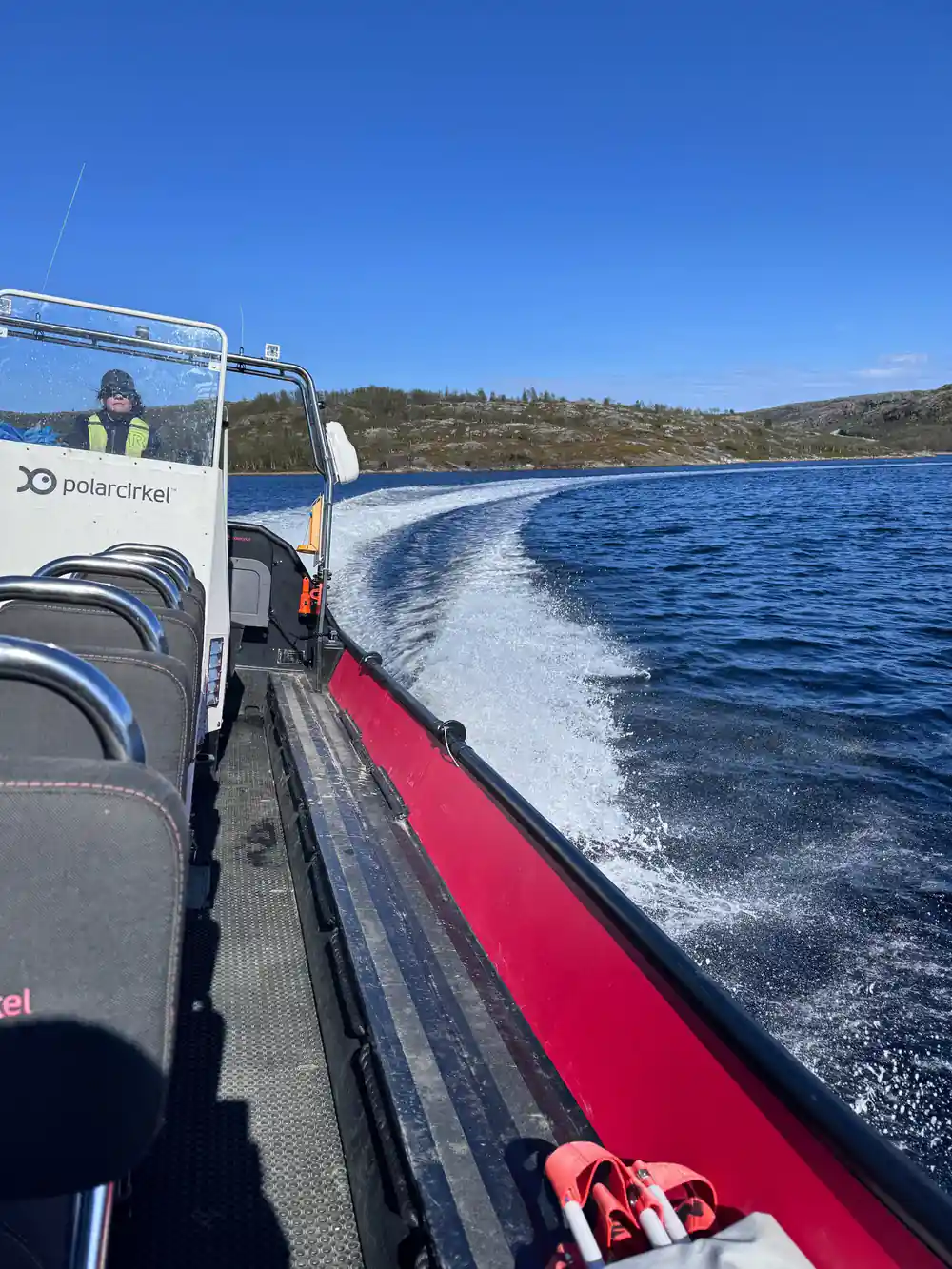
Practically, that means an afternoon safari departs in full daylight and returns in full daylight, and so would one at midnight. Temperatures are at their best, with July averaging around fifteen degrees by day and June around eleven. These are also the wettest months on the record, at fifty-nine and sixty-six millimetres, which in practice means passing showers rather than settled rain.
August and early September, the end of the window
August is quietly one of the best months here. It stays warm, averaging close to fourteen degrees by day, the ground has fully greened, and the light begins to behave normally again with around seventeen and a half hours of daylight rather than an unbroken day. For anyone who found the idea of no darkness at all disorienting, this is the compromise month.
By September the daylight is down to around thirteen hours and daytime temperatures have eased to about ten degrees, and the pier season closes in the middle of the month. Rainfall drops back from the July peak. The nights returning also means the first possibility of aurora late in the month, which is not something the summer safari can offer at all.
What the season should change about your packing
Less than you might think, because the flotation suit does most of the work and is provided regardless of month. The variable is what goes underneath it, and the honest answer is that a fast open boat on Arctic water is cool in every month of the year. Wind chill at speed does not care that the shore thermometer says fifteen degrees.
So dress for a cool day rather than a warm one in every month: long sleeves, long trousers, and shoes with some grip. In May and September add a proper warm layer underneath. In June and July the thing people most often wish they had brought is sunglasses, because a sun that never sets spends a great deal of time low and directly in your eyes off the water.
Is the crab itself different by season?
This is a fair question and it deserves a careful answer rather than a confident one. King crabs moult, and a crab that has recently shed its shell has less meat in it than one that has not, so there is genuine variation in what comes up in a pot across a year. That is a real feature of the animal rather than a marketing line.
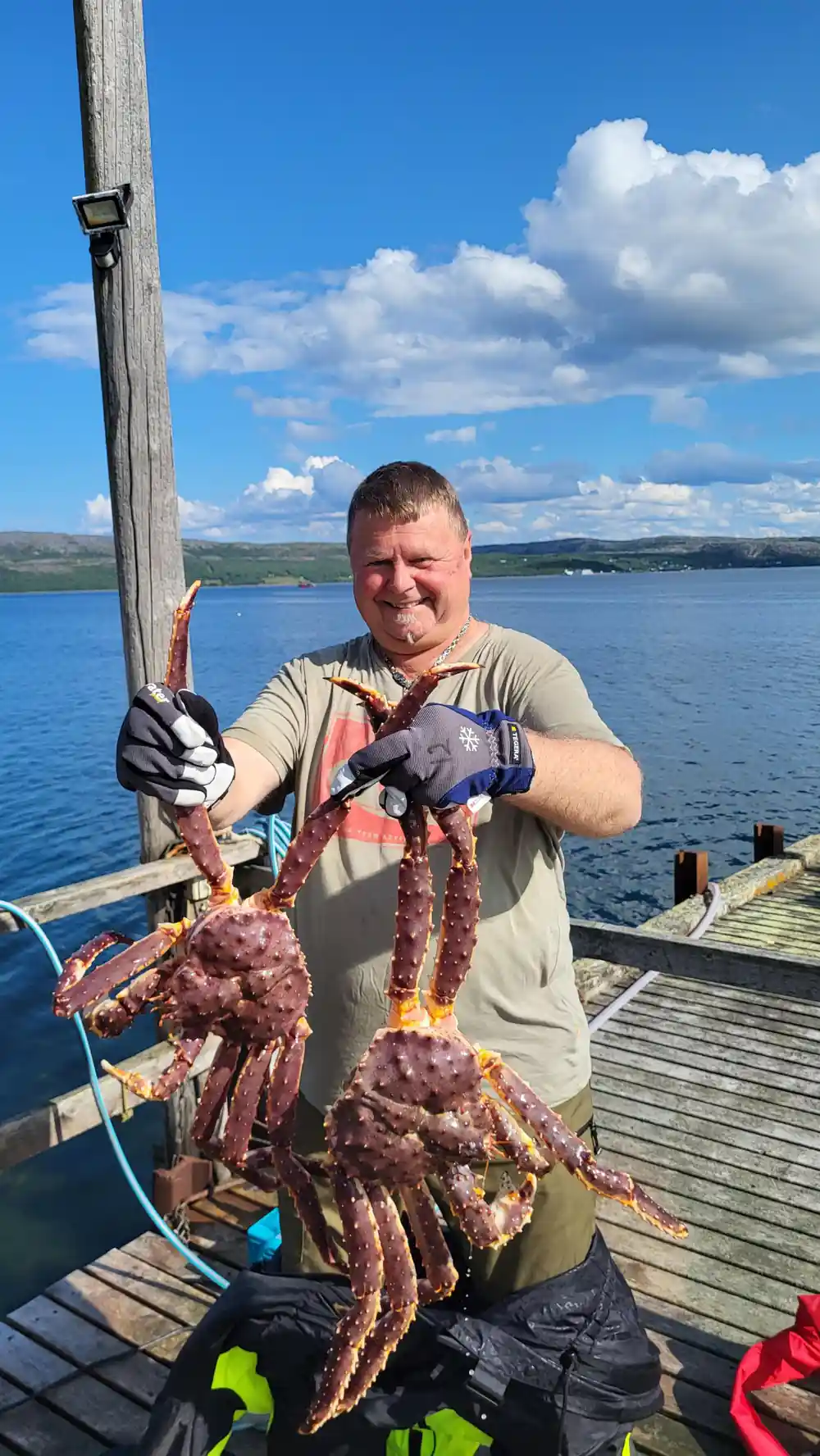
What that means for a visitor on a three-hour safari is very little, though. You are not selecting your own crab from a season's worth of options, and the operator is cooking what the pots produce on the day. The far larger variable in how good this trip is remains the weather and the light, not the moulting cycle.
Where the weather figures come from
One caveat worth stating plainly, because it affects how much weight to put on the numbers above. Kirkenes does not have a long-running weather station of its own in the international record, so the temperature and daylight figures here come from the station at Vadso, about thirty-eight kilometres away on the same stretch of coast, averaged over the thirty years from 1991 to 2020.
That is close enough to be genuinely useful and far enough to be worth mentioning. Both sit on the same low, exposed Varanger coastline at almost the same latitude, so the seasonal shape, the daylight and the broad temperature pattern carry across well. Treat the numbers as a reliable description of what a month in this area is like, rather than as a forecast for a particular afternoon on the water.
Pick your month and take the RIB out
from US$278Reserve now & pay later
Good to know first
When does the pier season run?
What happens outside those months?
Is there really no night in summer?
Which month is warmest?
Can I see the northern lights on this trip?
Is summer or winter better for king crab?
| Early season | High summer | Late season | |
|---|---|---|---|
| Months | May | June to July | August to mid-Sept |
| Daytime high | Around 7°C | 11°C to 15°C | 14°C down to 10°C |
| Daylight | Nearly 21 hours | Sun never sets | 17.5 down to 12.8 h |
| Rainfall | 37mm, driest run | 59 to 66mm | 61 down to 45mm |
| The fjord is | Cold, very bright | Warm, endless light | Softer, darker nights |