In a nutshell
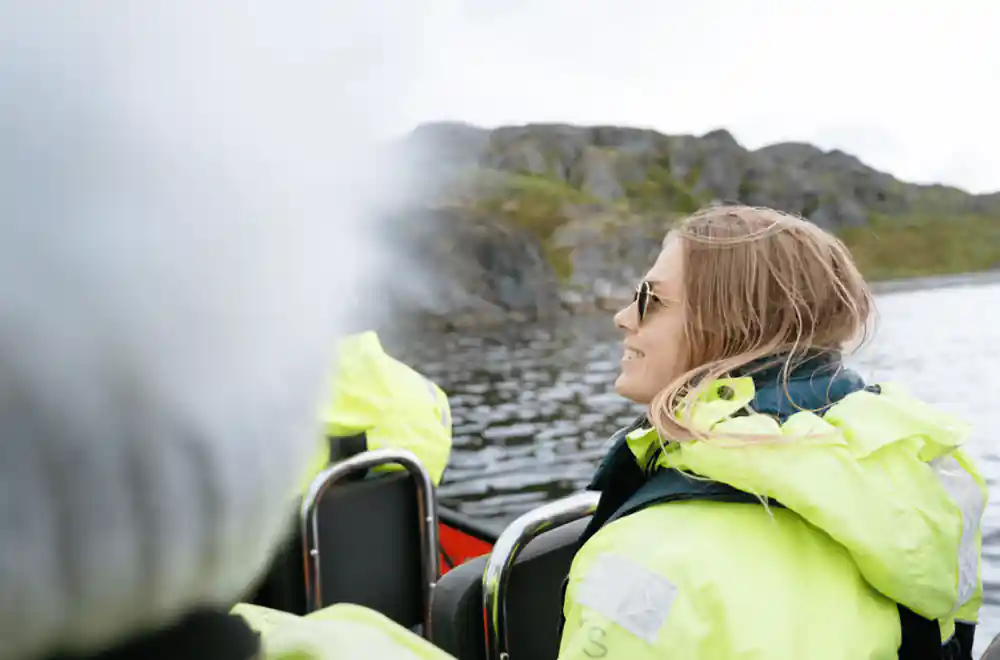
- Floating overalls, a life vest, mittens and a balaclava all come with the trip and go on over your own clothes at the pier.
- Wind chill on a fast open boat is real in every month, so long sleeves and long trousers underneath even in July.
- Comfortable shoes with some grip, because you will step between a pier and a moving boat and stand on a wet deck.
- A sun that never properly sets spends a lot of the day low and directly in your eyes off the water.
The suit does most of the work
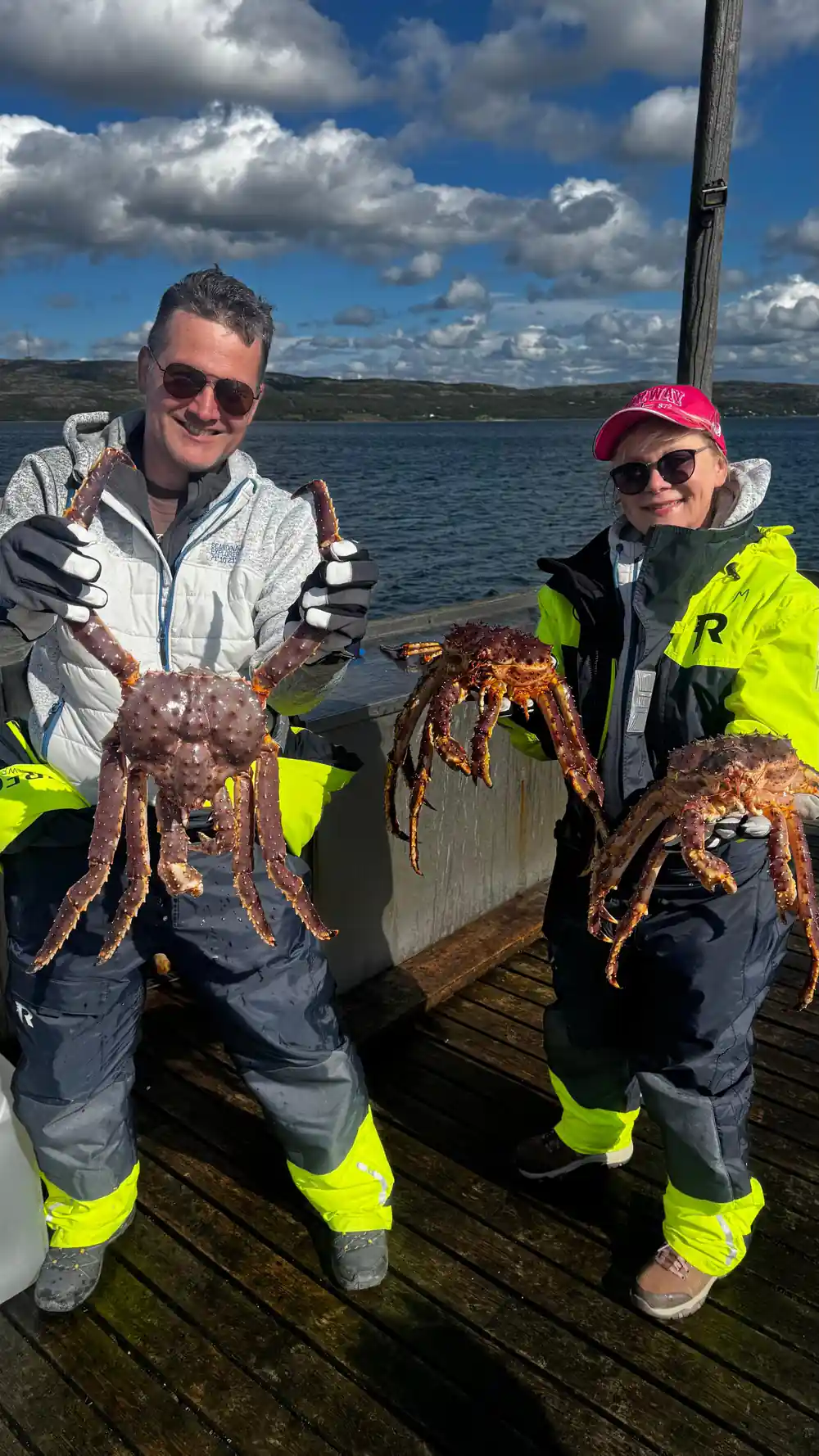
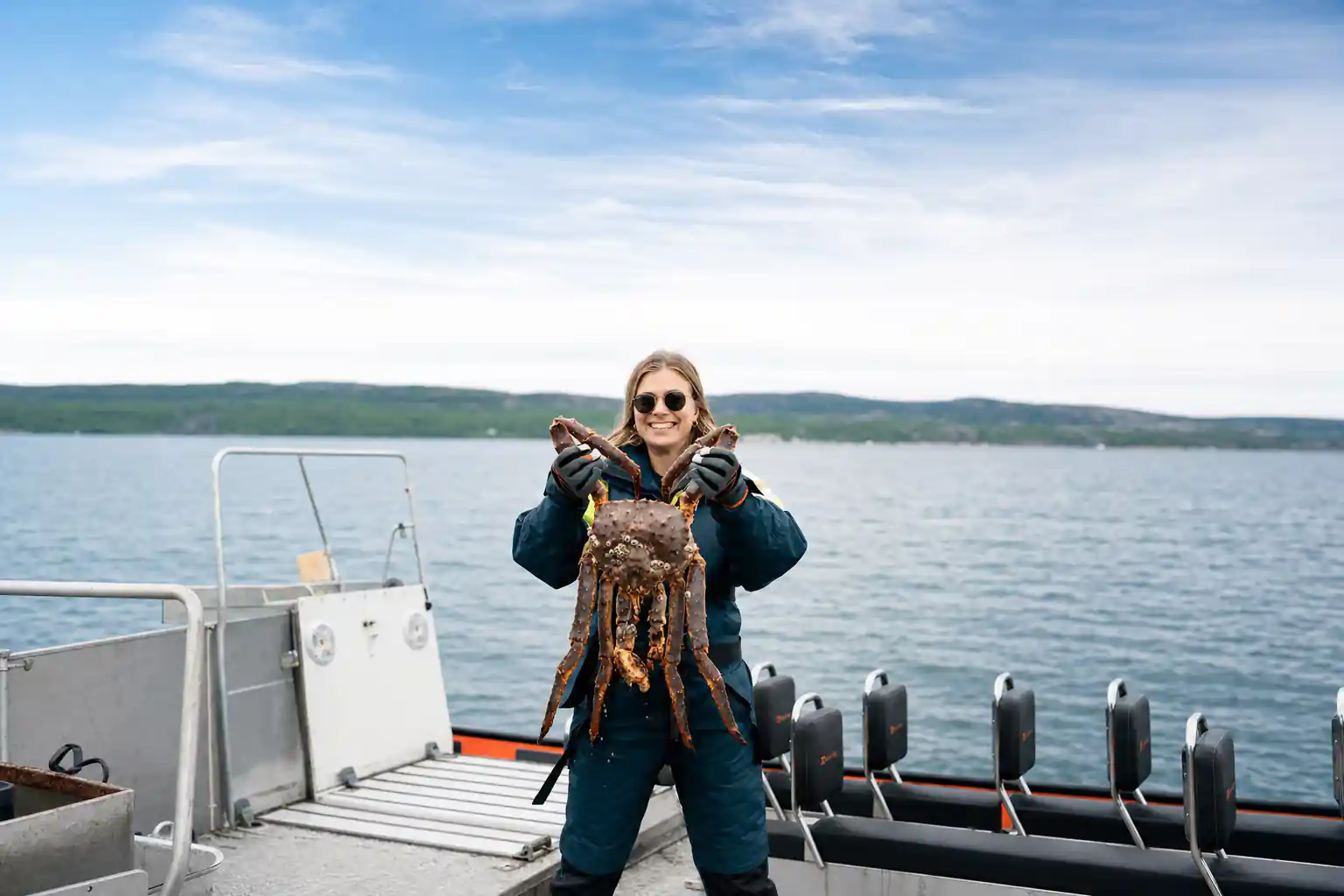
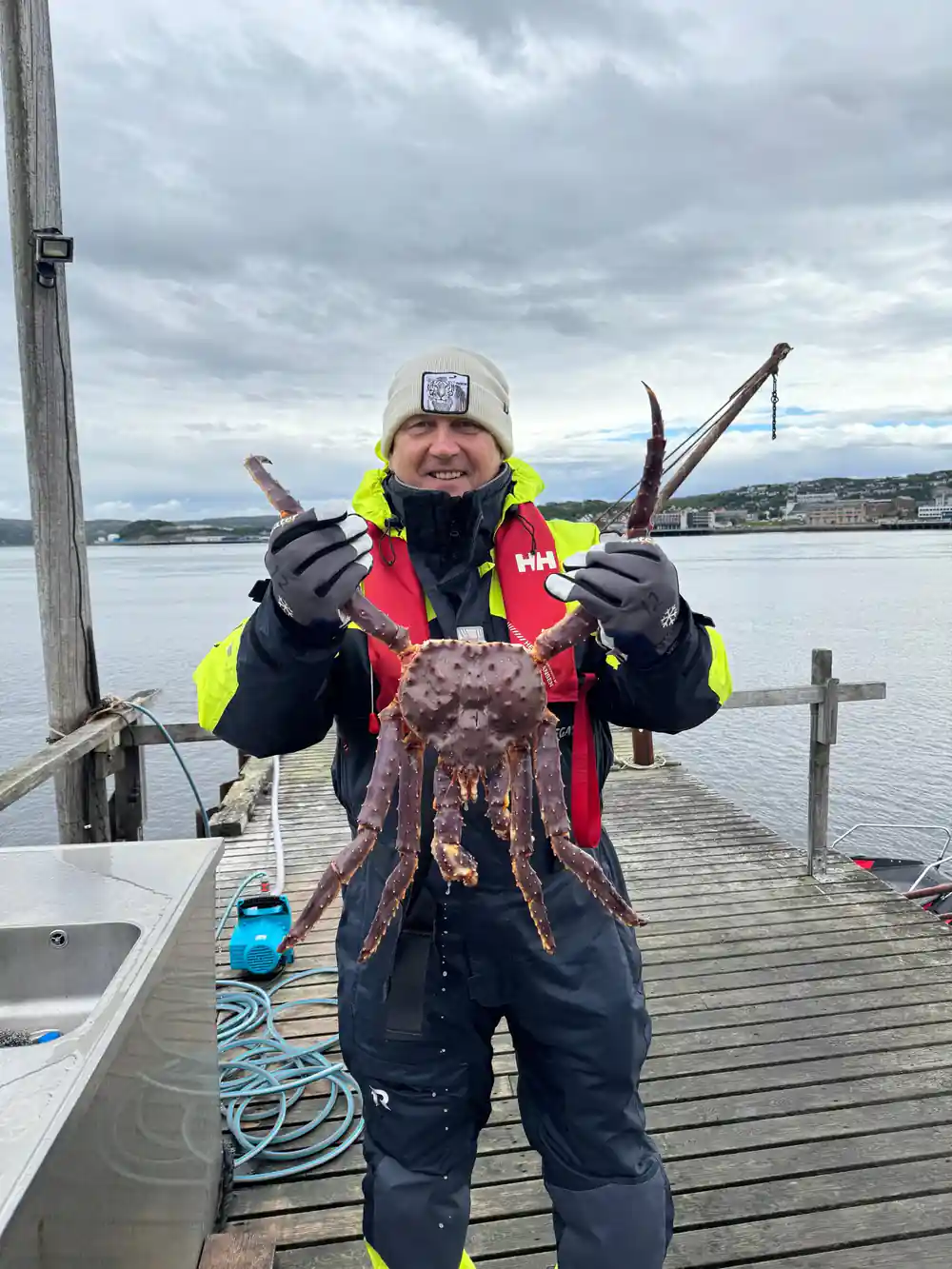
The single most useful thing to understand before packing is that you are not responsible for keeping yourself warm and dry on the water. The operator issues floating overalls, and that garment is doing two jobs at once: it is a full-body windproof layer and it is buoyancy, which is why it is called a flotation suit rather than a coat.
Mittens and a balaclava come with it, and a life vest goes over the top. All of this is handed out at the pier and put on over whatever you arrived in. So the question is not what to wear on a boat in the Arctic. The question is only what to wear underneath a suit that is already handling the wind and the spray.
What to put underneath in July
Dress as you would for a cool, breezy day rather than a warm one, and you will be comfortable. Long sleeves and long trousers, with something with a bit of insulation in it if you feel the cold. July in this part of Finnmark averages around fifteen degrees by day, which sounds pleasant and is, right up until the boat is moving.
That is the thing people get wrong. Wind chill on a fast open boat is not proportional to the temperature on shore. A fifteen-degree afternoon at speed on open water feels considerably colder than fifteen degrees standing still in town, and this is exactly why the operator hands out mittens and a balaclava in the middle of summer rather than only in winter.
Shoes are the part people underthink
The operator asks for comfortable shoes, and the reason is grip rather than comfort. You will step from a pier onto a boat that is moving slightly, stand on a deck that will be wet, and move around while a heavy pot comes over the side. A sole that grips is worth more here than any amount of insulation.
Trainers or walking shoes are ideal. Anything with a smooth sole is a bad idea, and open shoes are a worse one. You do not need boots: the suit covers your legs and this is a three-hour summer trip, not a winter expedition. What you need is to be able to stand confidently on wet fibreglass.
Hands, head and the wind
Mittens rather than gloves are what you are given, and mittens are warmer because your fingers share the space. The trade is dexterity, which becomes relevant the moment you want to use a phone. It is worth knowing in advance that you will be taking a mitten off to photograph a crab and putting it back on afterwards.
The balaclava seems excessive until the run out. At speed, on open water, in any month, an uncovered head and ears get cold quickly, and the balaclava also keeps spray off your face. Wear it for the transit even if you take it off while the boat is stopped.
Sunglasses, and the light
This is the item most often forgotten and the one people most regret. During the summer season the sun does not properly set, and a sun that never sets spends an enormous proportion of its time low in the sky. Low sun over water means glare, from directly ahead and reflected off the surface, for hours at a stretch.
Sunglasses are therefore not a nice-to-have on an afternoon safari here, they are the difference between watching the fjord and squinting at it. Sunscreen is worth a thought too, for the same reason: several hours of low, persistent Arctic sun with reflection off water catches people who assumed that cool weather meant no sun to speak of.
Protecting a phone or a camera
Anything you take out on an open boat should be attached to you. A wrist strap, a neck strap or a zipped pocket, because a phone that slips out of a mittened hand on a RIB does not land on the floor. There is no floor, there is the fjord.
Beyond that, no special equipment is needed. This is a sheltered fjord rather than an ocean crossing, and in normal conditions you are not being drenched. A phone in a pocket between photographs is fine. The precaution is about dropping things, not about immersion.
What not to bother with
Leave the good coat at the hotel. It goes under the suit where nobody sees it, and it will smell faintly of boat afterwards. The same applies to anything you would be unhappy to get a spot of seawater or a smear of crab on, which by the end of the afternoon covers most of what you are wearing.
You do not need waterproofs of your own, because that is what the suit is. You do not need a change of clothes for three hours. A bag is more nuisance than help on a small open boat where there is nowhere sensible to stow one, so take what fits in your pockets and leave the rest in the vehicle.
They provide the suit, you bring the layers
from US$278Reserve now & pay later
Good to know first
What does the operator provide?
What should I wear underneath?
Do I need warm clothes in July?
What shoes should I bring?
Is there anything people forget?
Should I bring a bag?
Provided by the operator
- Floating overalls that go on over your own clothing
- Life vest, worn throughout the trip
- Mittens and a balaclava for the run out
Bring yourself
- ClothingWarm layers, long sleeves
- FootwearComfortable shoes with grip
- Summer extraSunglasses
- For a phoneA strap or zipped pocket