






Why Kirkenes is where this happens
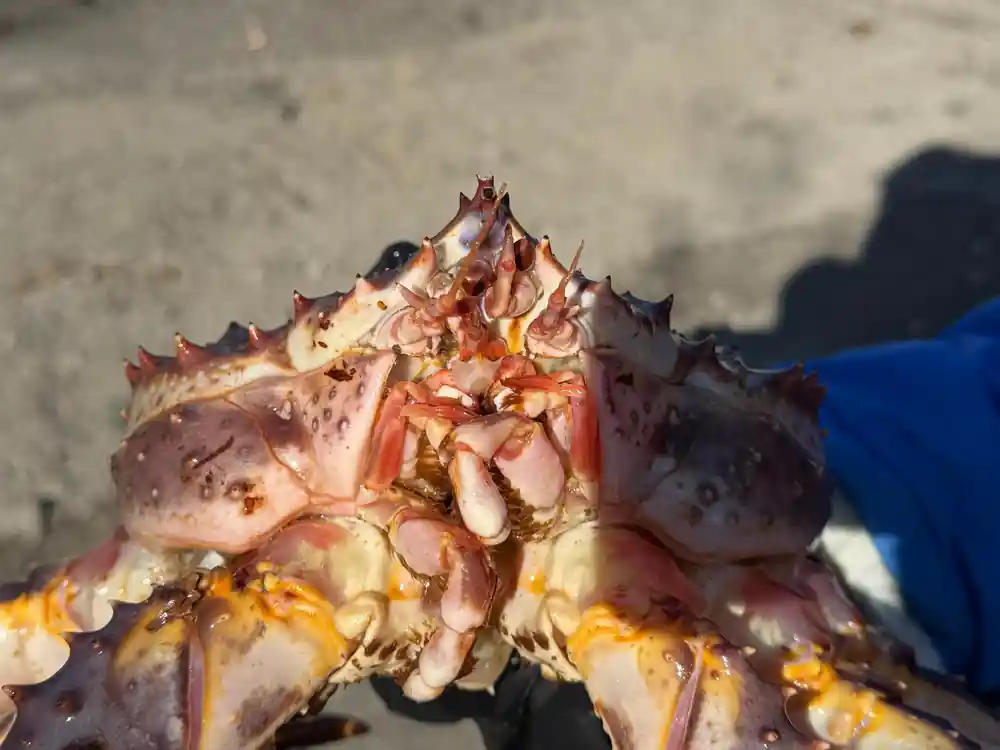
The red king crab reached Norway from the east, and Kirkenes is the first Norwegian town it arrived at. That accident of geography turned a small border town into the centre of a national fishery, and it is the reason a visitor safari here is not a tourist recreation of something that happens elsewhere. The boats you pass at the start of the trip are the boats that work the quota, and the pots you help pull are the same design they use.
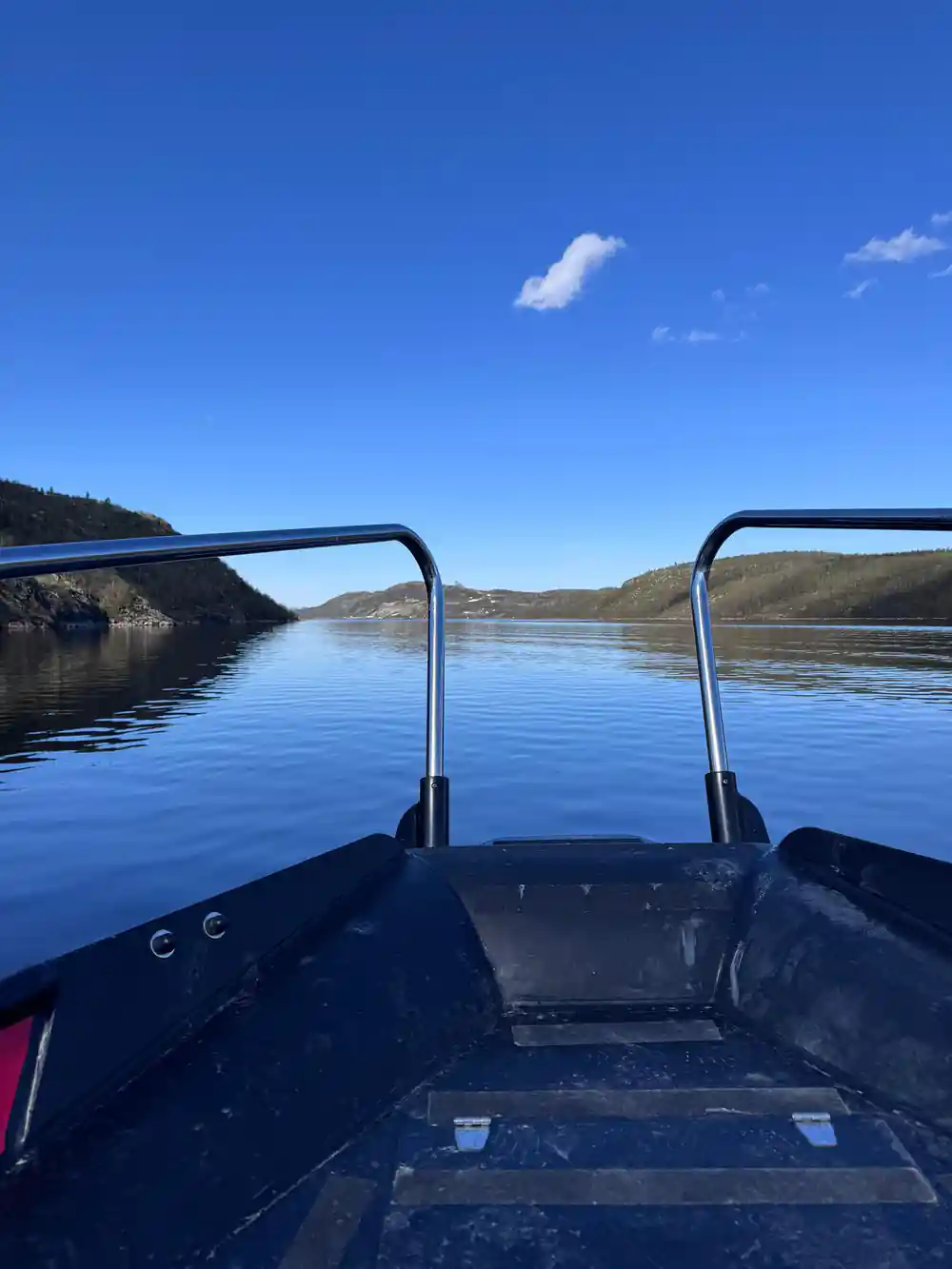
Kirkenes itself sits at the top right corner of the country, near enough to the Russian border that the town has spent a century being shaped by it. The fjord you go out into is wide, low-shouldered and quiet, nothing like the steep dramatic fjords of the western coast, and on a clear summer day it is a startling blue. You are a long way from anywhere, and the trip does not let you forget it.
What actually happens in the three hours
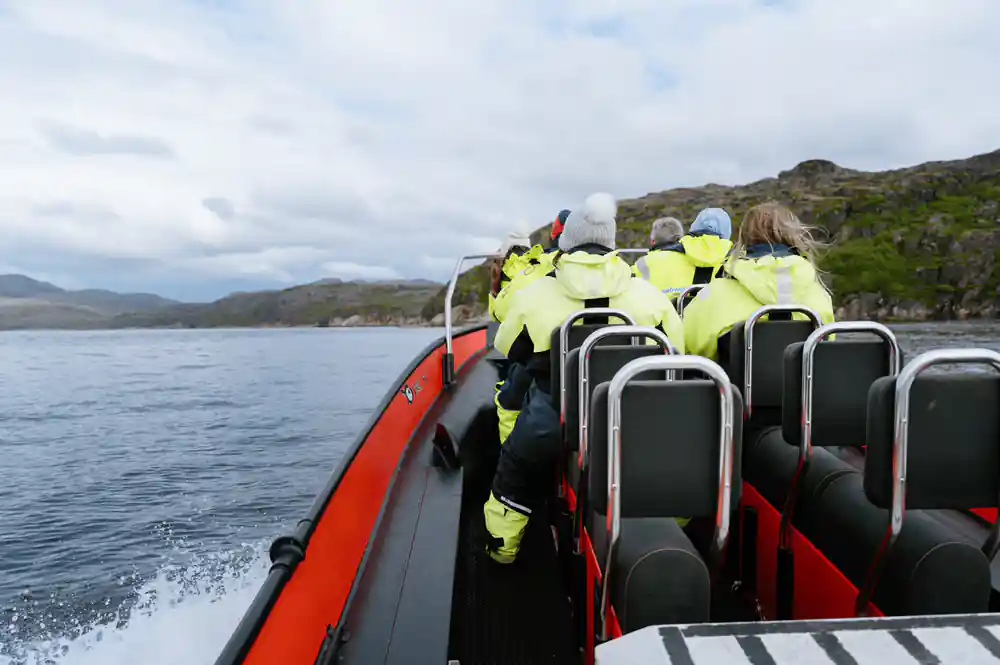
It starts with a pickup from your hotel, which matters more here than it sounds, because Kirkenes is spread out and the pier is not somewhere you would stumble across. At the King Crab pier you are given a flotation suit and a safety briefing before boarding, and the suit is the thing that makes a summer RIB trip comfortable rather than merely survivable.
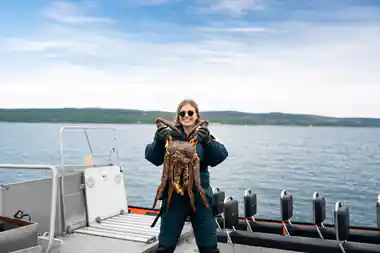
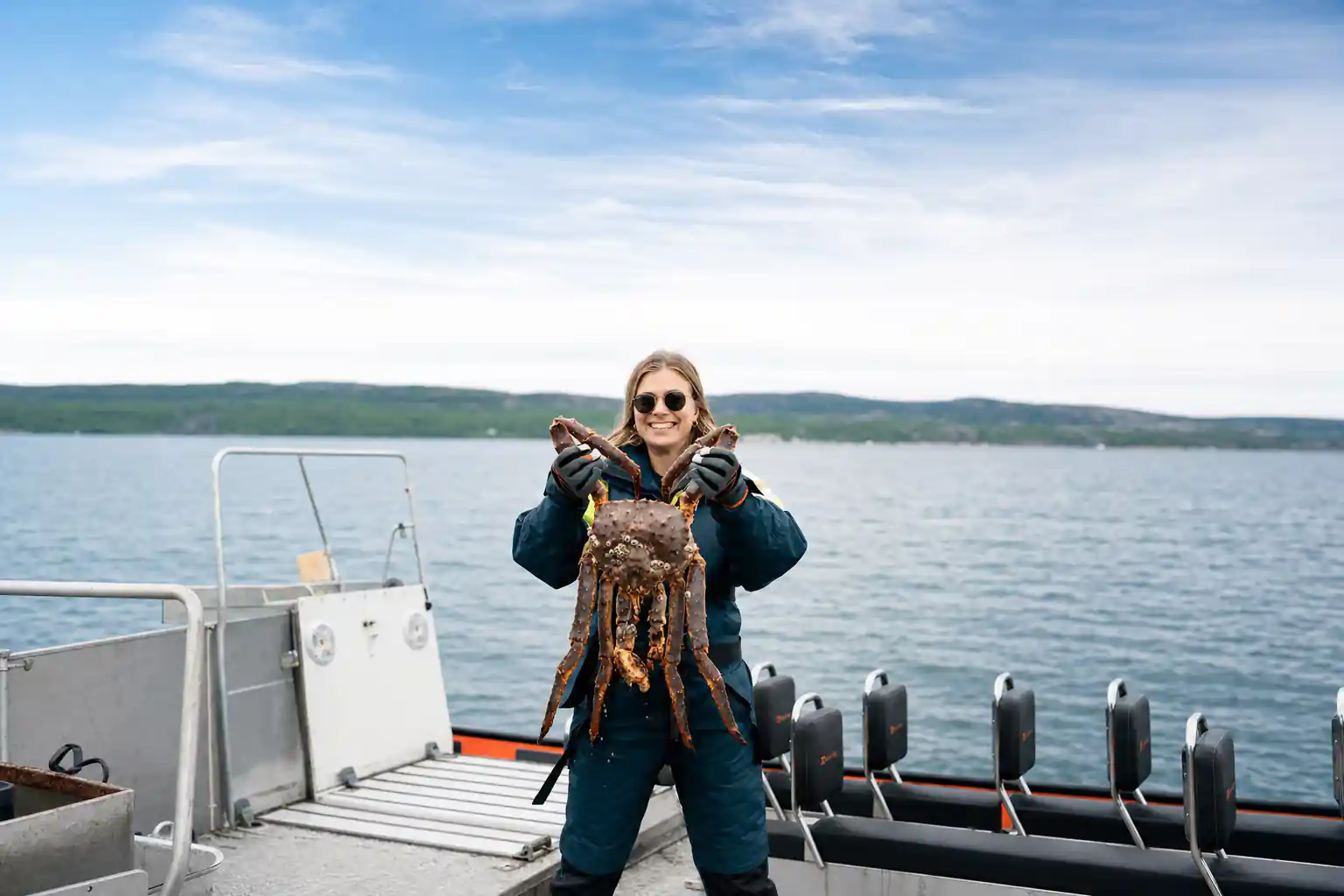
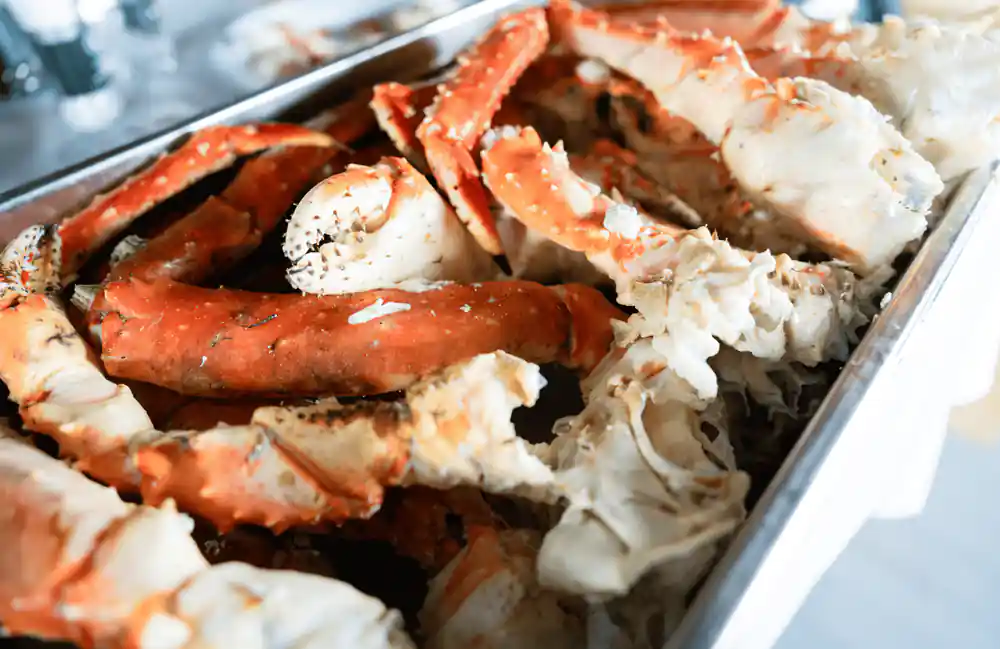
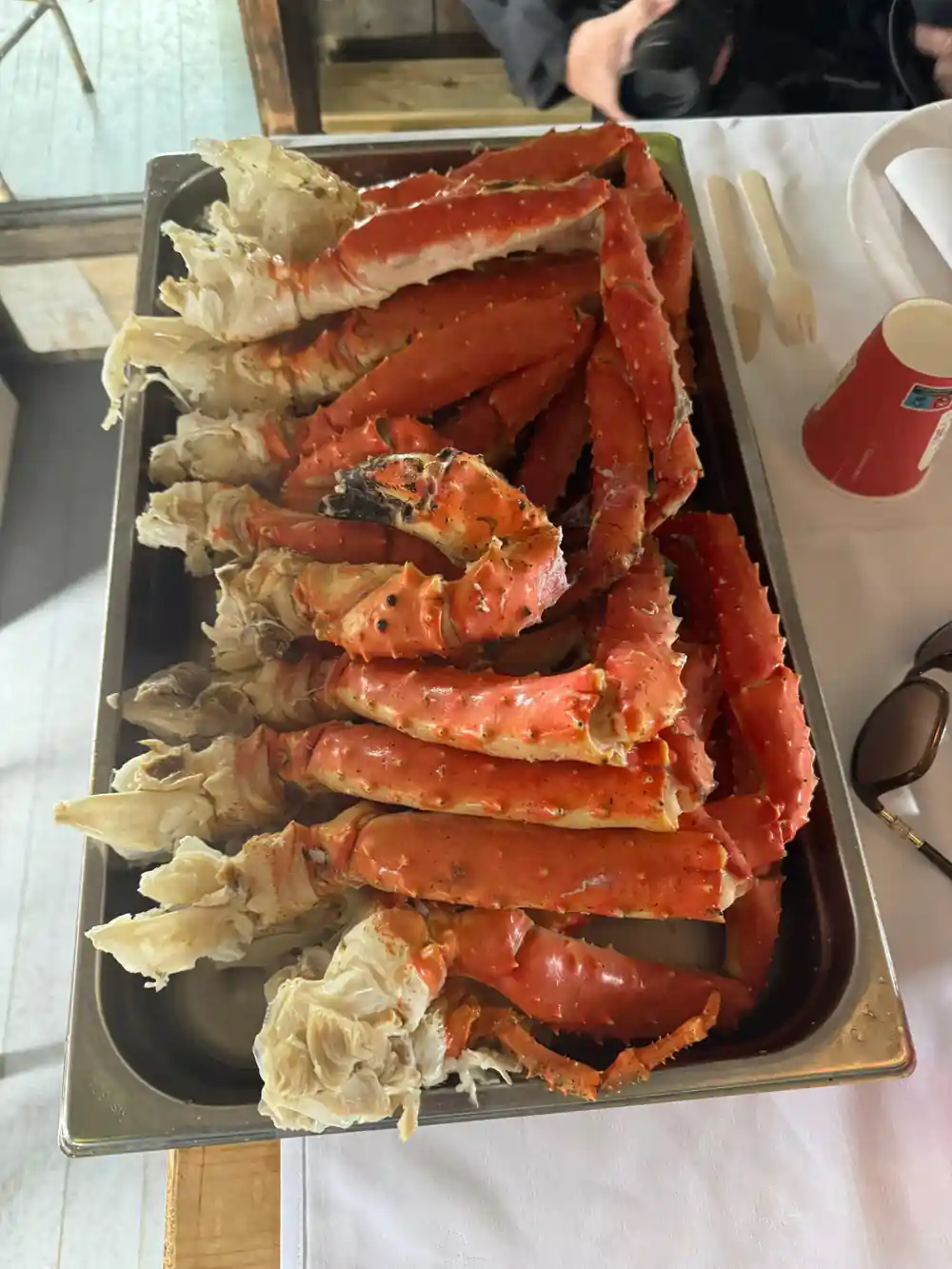
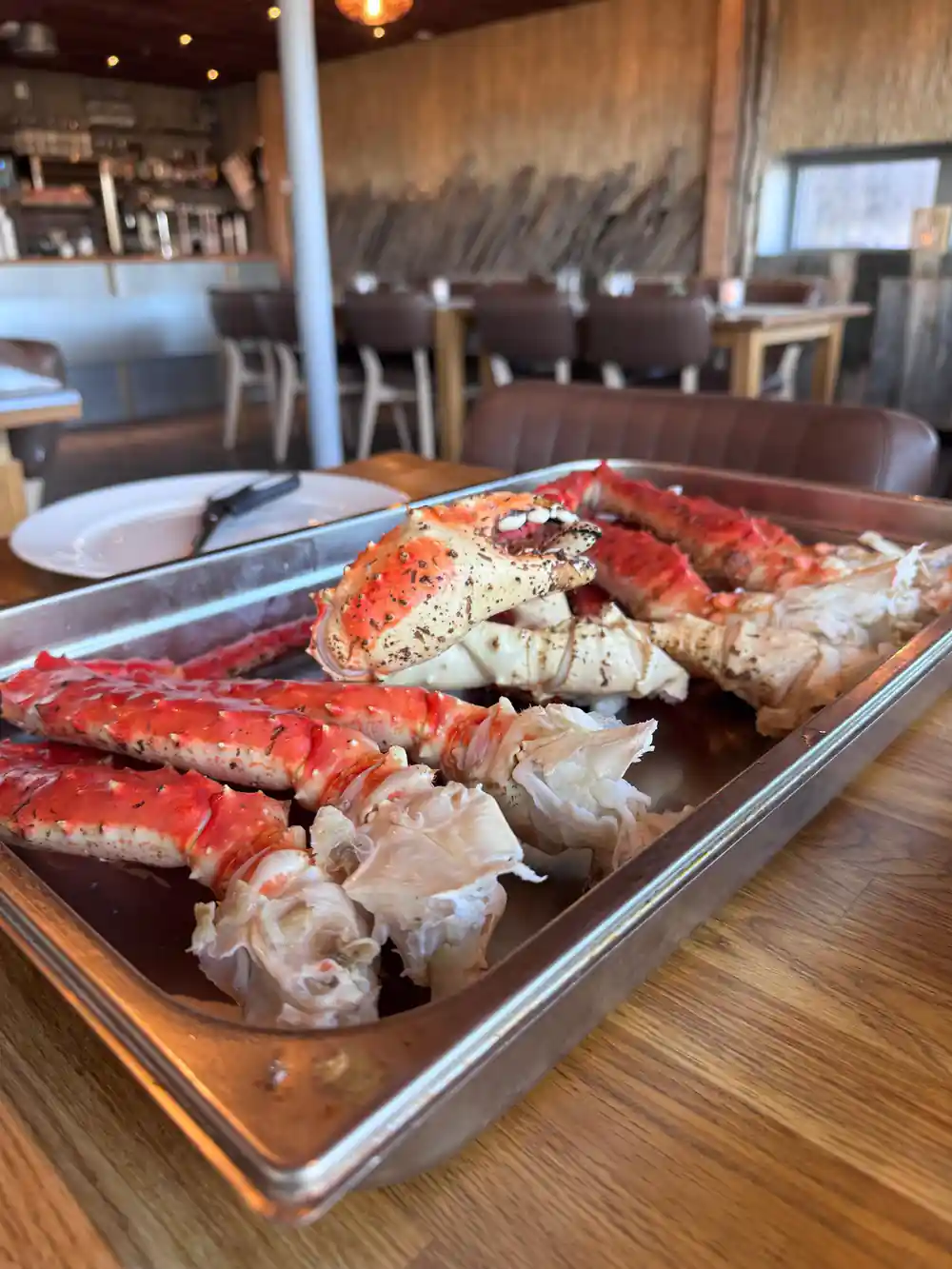
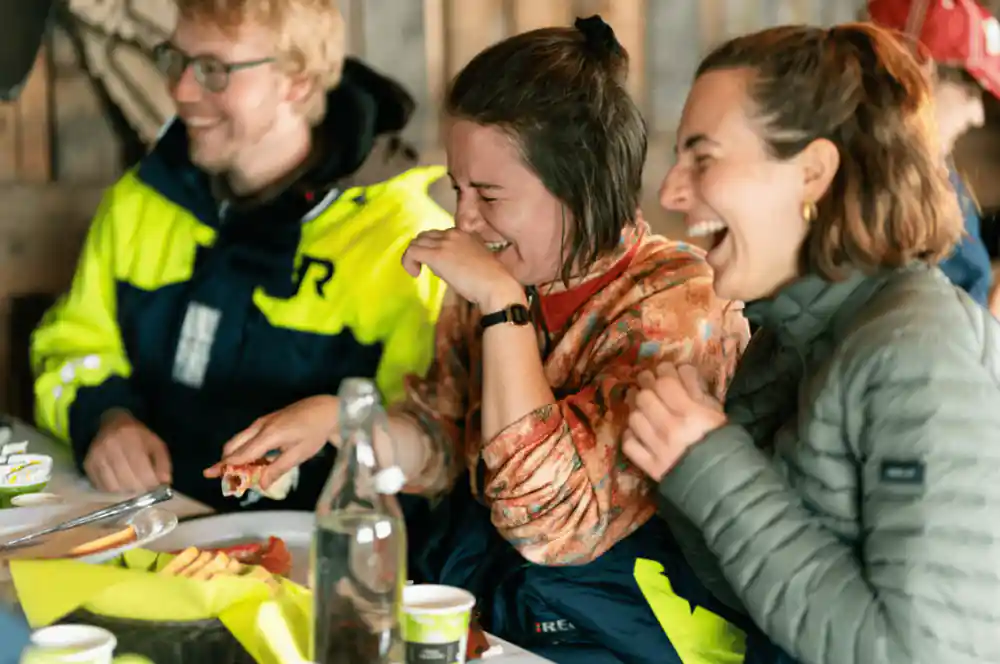
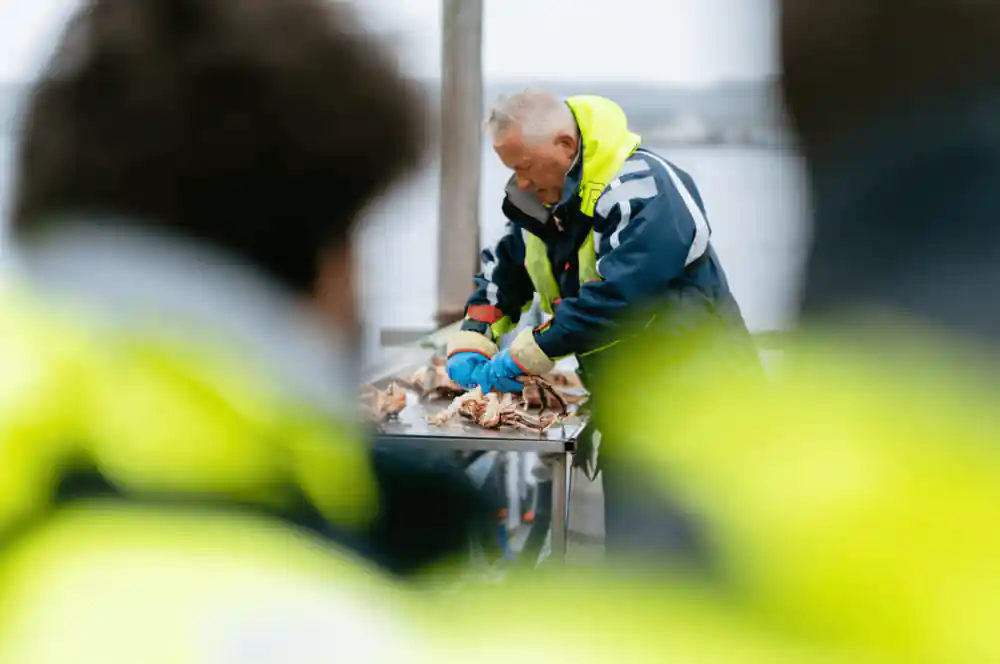
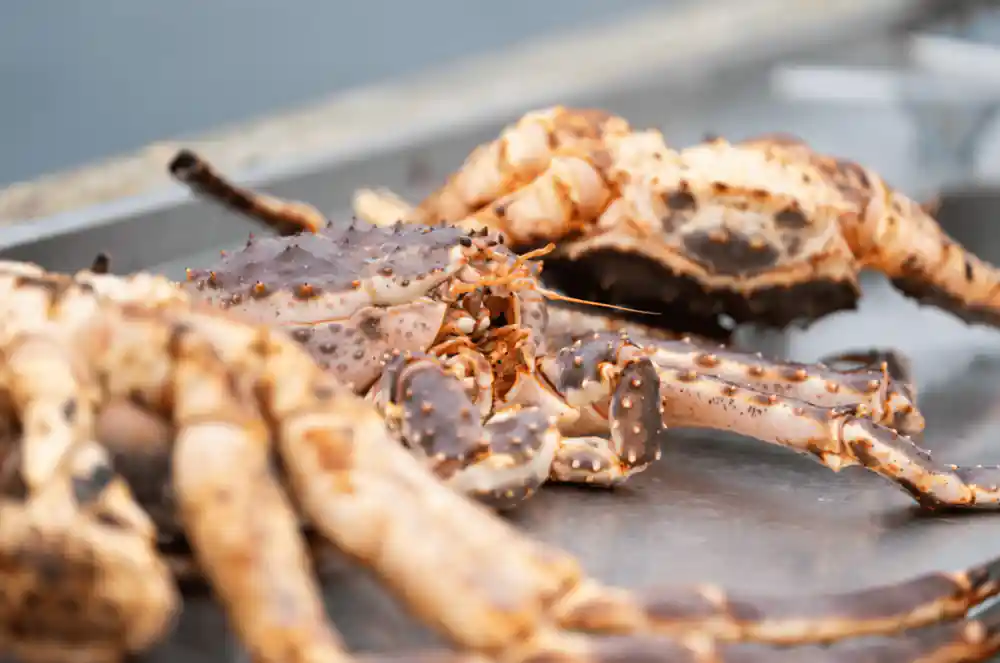
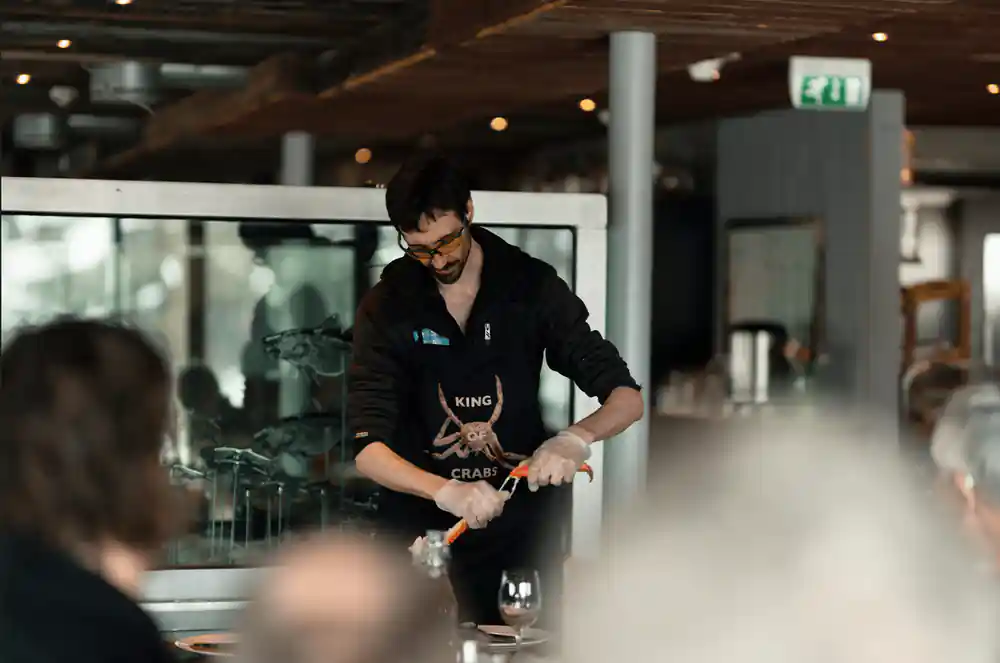
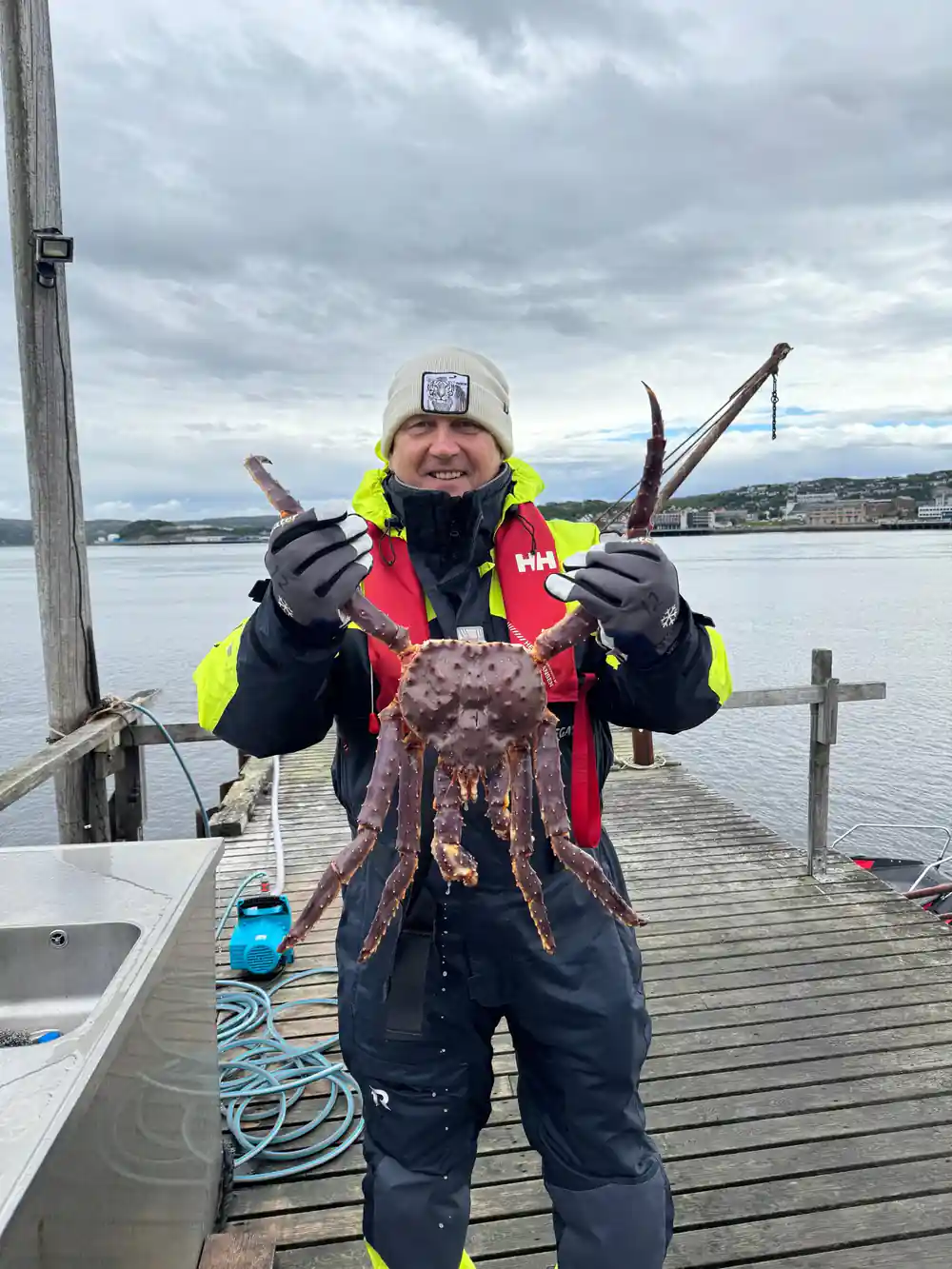
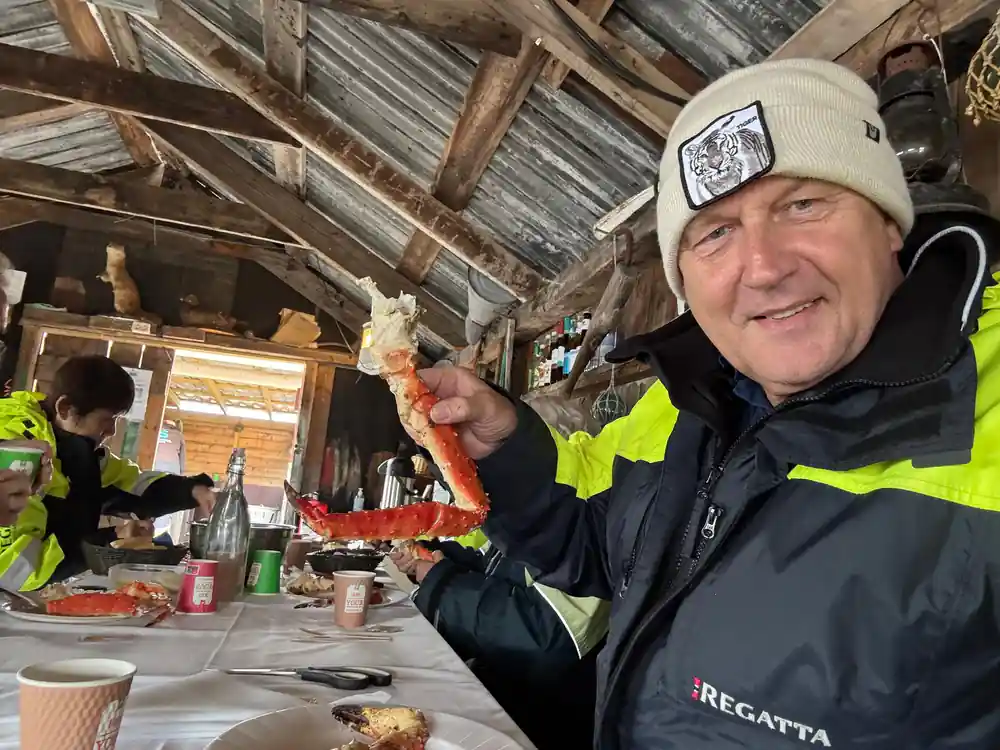
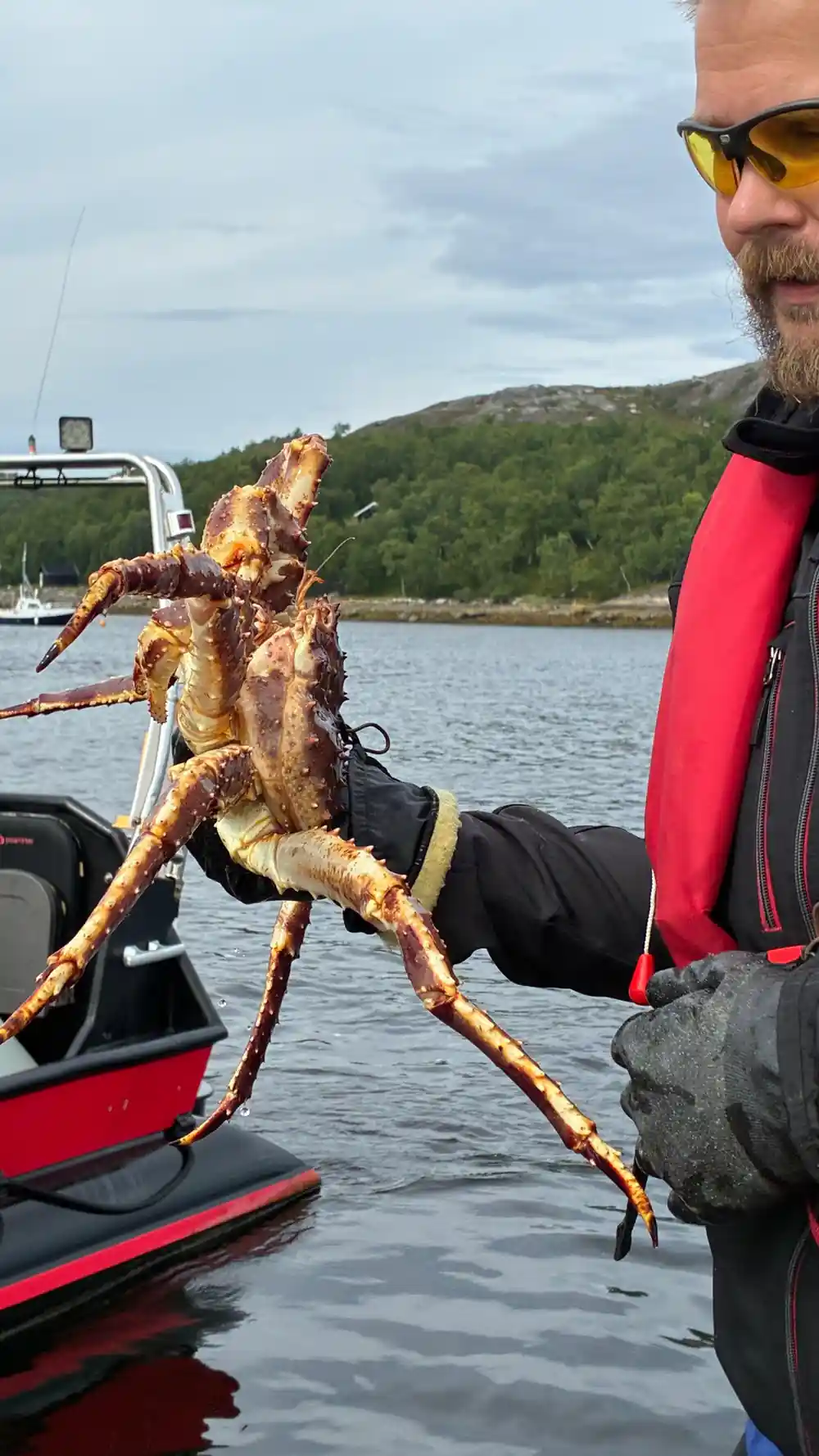
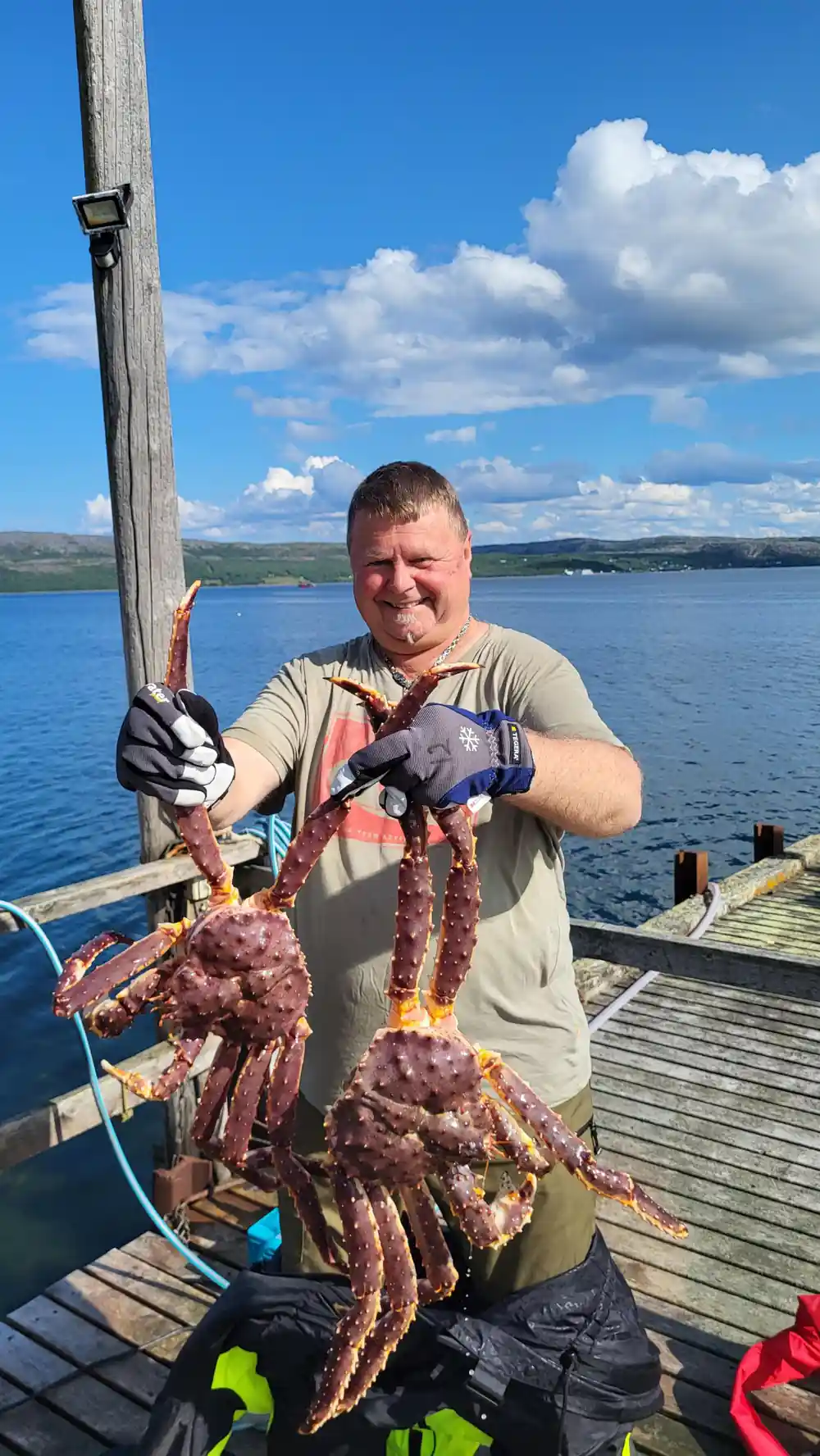
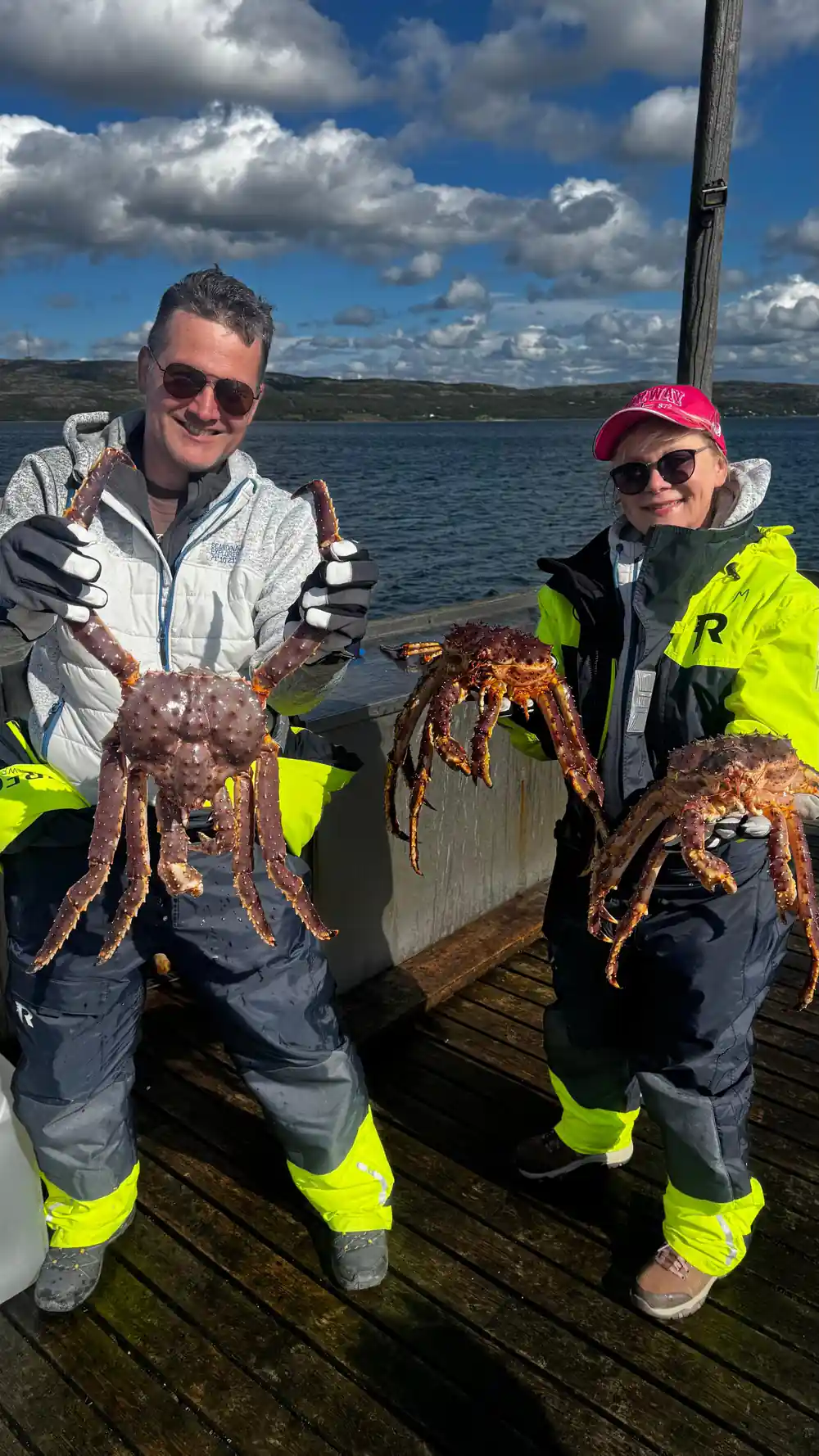
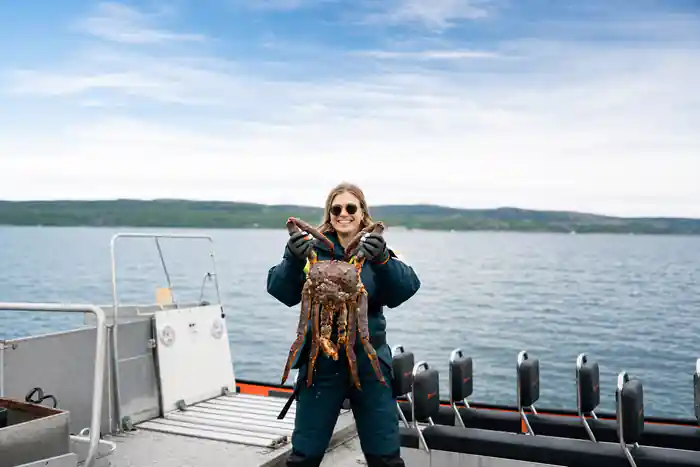
The boat calls first at the local fishing boats, where the guide explains how the fishery works and what a pot actually does on the seabed. Then it runs out to the wartime battle stations in the fjord, which is where the trip stops being only about crab. After that come the pots themselves, and you help haul them. The catch goes across the water to a rustic boathouse, where it is cooked while you have coffee, and then the legs come out on a board with bread, butter, mayonnaise and lemon, and somebody shows you how to open one without wearing it.
The RIB, and whether it suits you
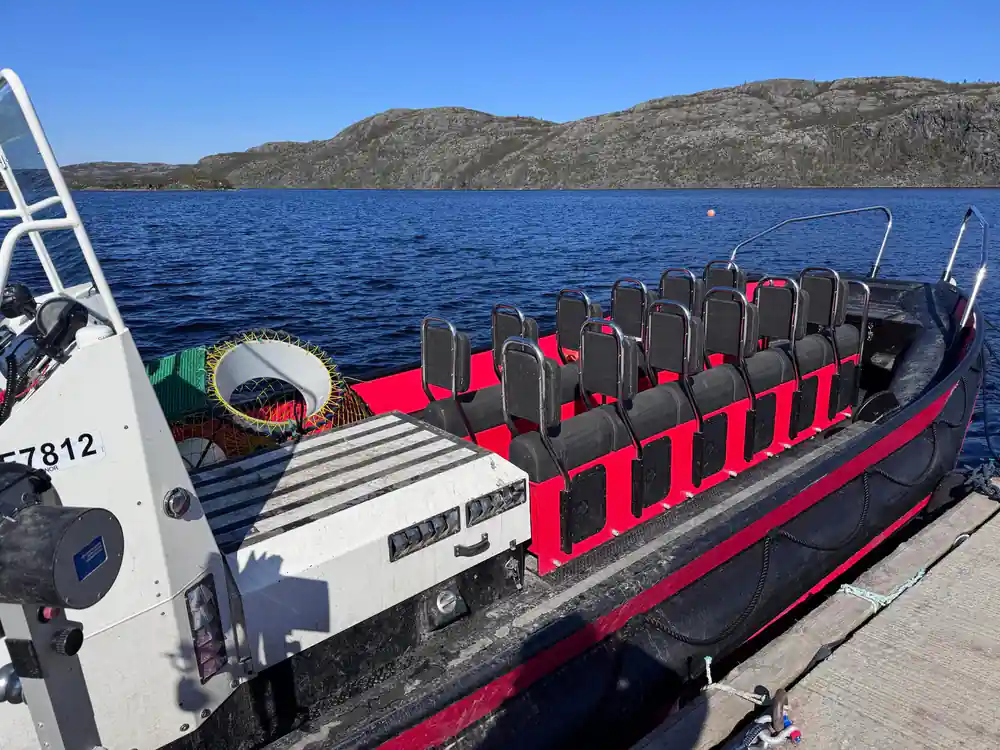
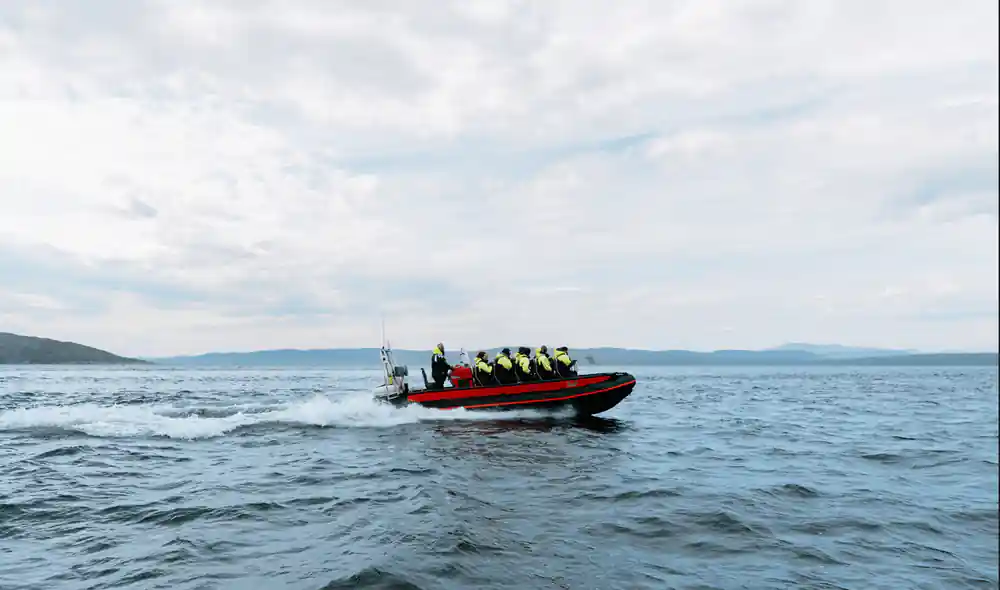
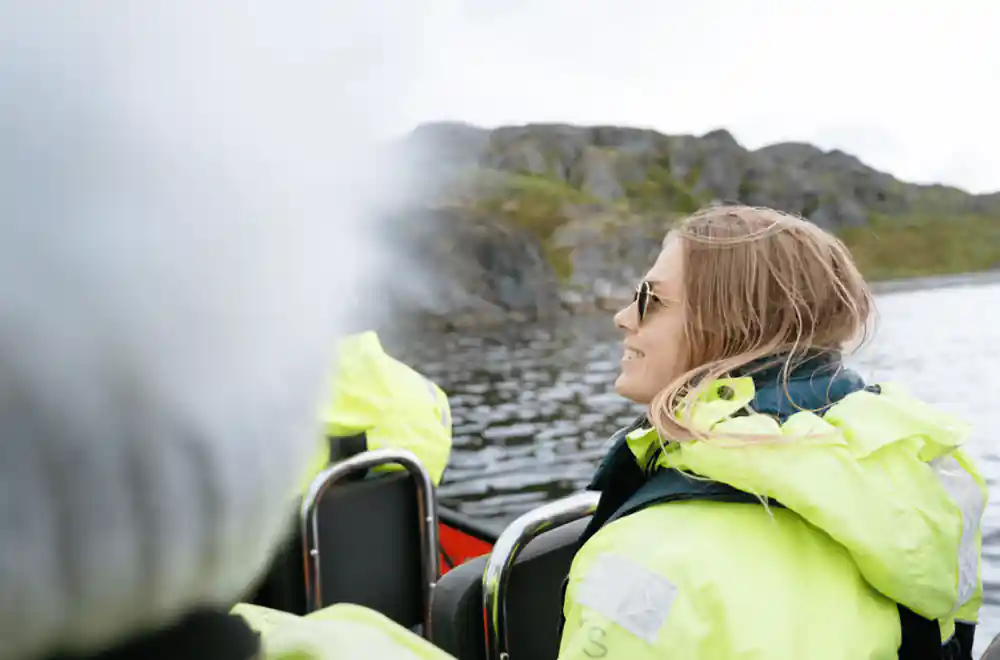
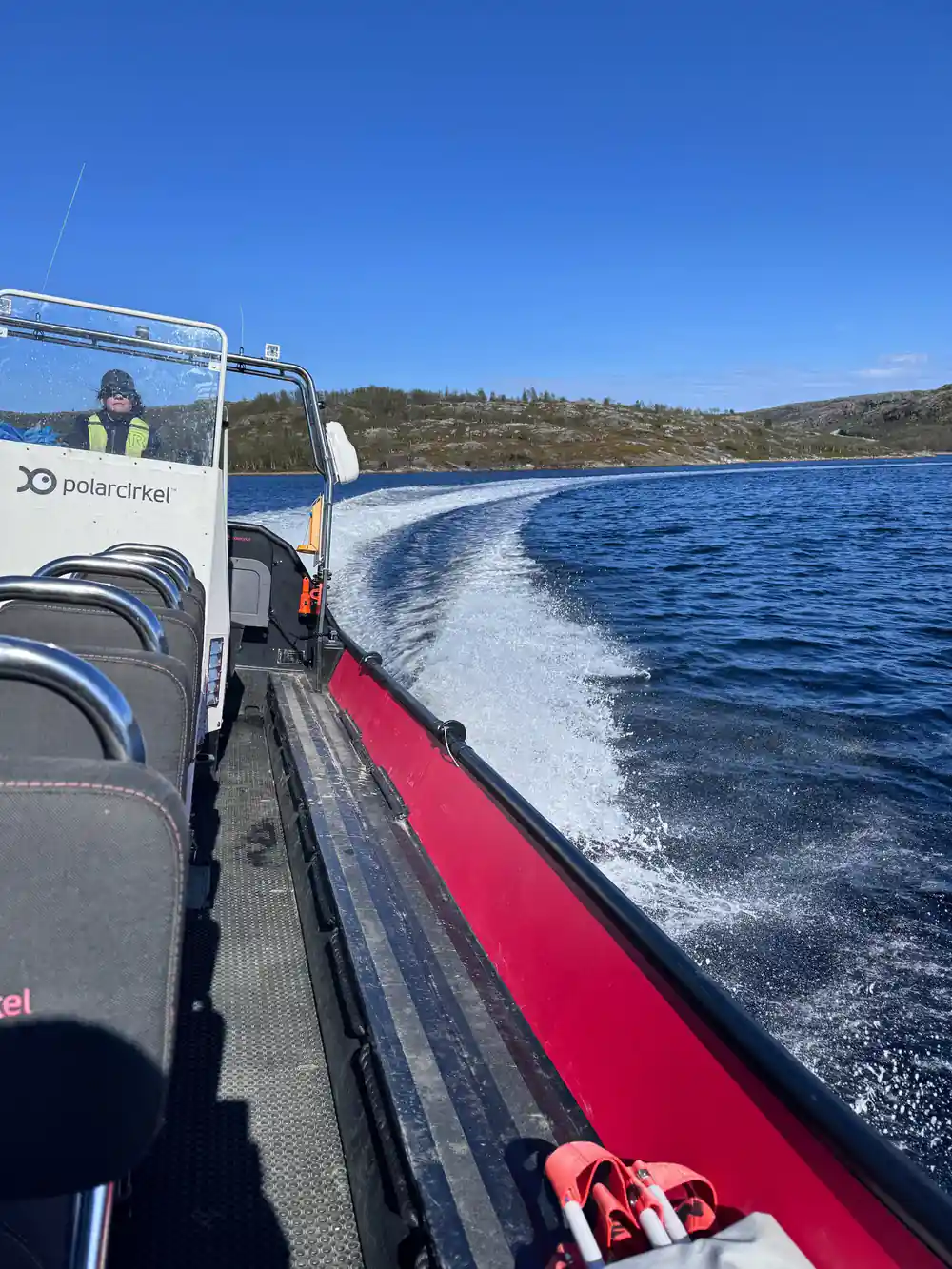
A RIB is a rigid-hulled inflatable: a hard bottom with inflated tubes around it, seats you sit astride or brace into, and an outboard that moves it along at a serious pace. It is open to the sky. On a calm July afternoon that is glorious and you will be glad of the sunglasses. When the fjord is choppy it is a livelier ride than a cruise boat, and you feel every part of it.
The suit, the mittens and the balaclava are all provided, which tells you something about how the operator expects the weather to behave even in summer. The trade you are making is shelter for speed and closeness to the water. For a three-hour trip in a sheltered fjord, most people find that a good trade, but it is worth knowing before you book rather than at the pier.
The meal at the end
The crab is cooked on shore, not on the boat, and that is the right way round. A boathouse across the fjord means a table, a roof, and time to eat properly rather than balancing a plate on your knees in the wind. It is a working building rather than a restaurant, and it is better for it.
Served Northern Norwegian style means the legs arrive split, with bread and butter and mayonnaise and lemon, and very little else in the way of ceremony. King crab does not need much. Additional drinks are available to buy at the boathouse, and coffee or tea comes while the crabs are being prepared.
When it runs, and what summer means this far north
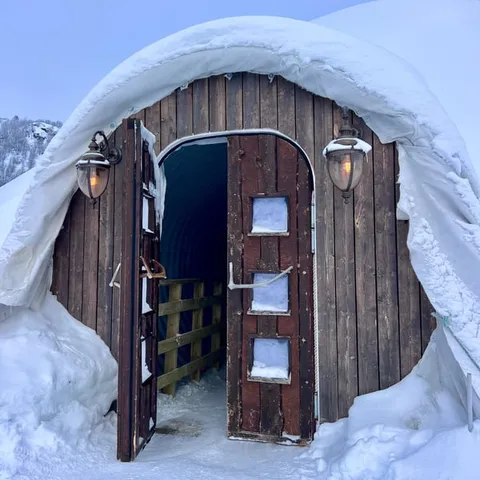
Between May and the middle of September you leave from the King Crab pier in the town itself. Outside those months the starting point moves to the Snow Resort instead, which changes where you are collected rather than whether the trip runs. Summer in Kirkenes is short, mild and extraordinarily long in the day: July averages around fifteen degrees, and from late May to late July the sun does not properly set at all.
That last part is worth planning around. An afternoon departure in June or July happens in full daylight that will still be full daylight at midnight. It also means you should not come here in summer expecting northern lights, which need a dark sky that simply does not exist in these months.
Who it suits
It suits anyone curious about where their food comes from and willing to sit on a fast open boat for a while to find out. The three-hour length makes it easy to fit around whatever else brought you to Finnmark, and the hotel transfer removes the one genuinely awkward part of doing it independently.
The operator publishes no age limit, no weight limit and no list of conditions that would rule someone out, so the honest guidance is about the boat rather than about a rule. You need to be able to get in and out of a RIB from a pier, sit braced while it moves, and stand up on a wet deck while a pot comes aboard. If that sounds fine, it will be fine.