In a nutshell
- The stated duration covers the transfer at both ends, the time on the RIB, hauling the pots and the meal on the far shore.
- Pickup, the working fishing boats, the wartime battle stations, the crab pots, and the boathouse meal, in that order.
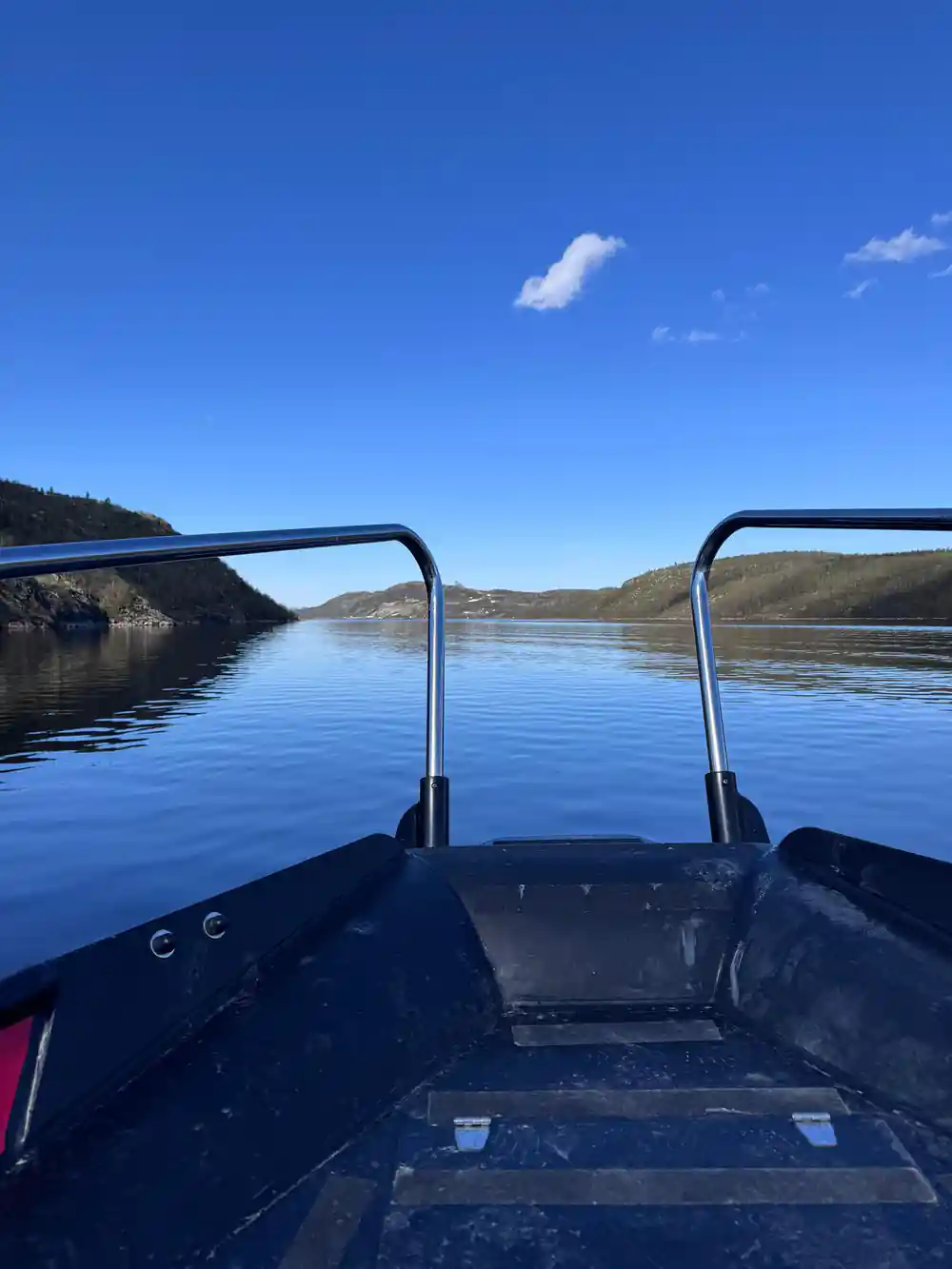
- The RIB covers the fjord quickly, which is what makes a trip with this many parts fit inside an afternoon.
Why three hours is the right length
It is short enough to be an afternoon rather than a commitment, and long enough that none of the five parts feels rushed. That balance is only possible because the boat is a RIB: a slower vessel covering the same fjord would spend the whole three hours travelling and would have to drop something.
In practice this means the safari fits around whatever else brought you to Finnmark instead of dictating the day. You are collected, you go out, you come back, and you still have an evening. In the summer months that evening happens in broad daylight, which makes an afternoon trip feel even less like it has consumed the day.
The pickup, and the drive out
The first thing that happens is that somebody collects you from your hotel. It is easy to write this off as logistics, and guests consistently do not: what they describe is a driver who uses the run out to explain the town, its history and why it looks the way it does.
That matters here more than it would elsewhere. Kirkenes is not a self-explanatory place. It is a small modern town at the top right corner of Norway with almost no old buildings, and the reason for that is the war. Arriving at the pier already knowing this changes how the rest of the afternoon reads, particularly the stretch where you pass the gun positions.
The pier: getting suited and briefed
At the King Crab pier you are handed the flotation suit and the rest of the kit, and this takes longer than newcomers expect. A full-body overall with buoyancy in it goes on over your own clothes, and then mittens and a balaclava on top, and there are several people doing this at once.
The safety briefing happens before boarding rather than under way, which is the right order. It covers how to move around the boat, where to hold on and what happens when the pots come aboard. None of it is alarming. It is the ordinary business of putting a small group on a fast open boat safely.
3h
The whole safari, transfers included: five separate parts of the day inside a single afternoon on the Kirkenes fjord.
The working boats and the fishery
The first stop is at local fishing boats, and this is the part of the itinerary that most distinguishes a Kirkenes safari from a crab trip anywhere else. You are not being shown a display. These are the vessels that work the commercial fishery, in the town where that fishery is based, and the guide uses them to explain how king crab is actually caught here.
What you get out of it is context for everything that follows. A pot is a simple object and its logic is not obvious until somebody explains what it does on the seabed, how long it sits there and why it catches what it catches. Ten minutes of that turns the later haul from a novelty into something you understand.
The battle stations
Then the boat runs out to the wartime positions in the fjord, and the trip briefly stops being about crab at all. Kirkenes was a German supply base and one of the most bombed places in Europe, and the fjord was a defended channel. The positions dug into the low shoreline were there to cover the approaches to the harbour.
Seen without commentary this is concrete on a hillside. With it, the geography snaps into focus: you can see what the guns were covering because you are floating in it. It is a genuinely unusual thing to have on a food-and-fishing trip, and it is the part people tend to describe afterwards when asked what surprised them.
The pots, which is what you came for
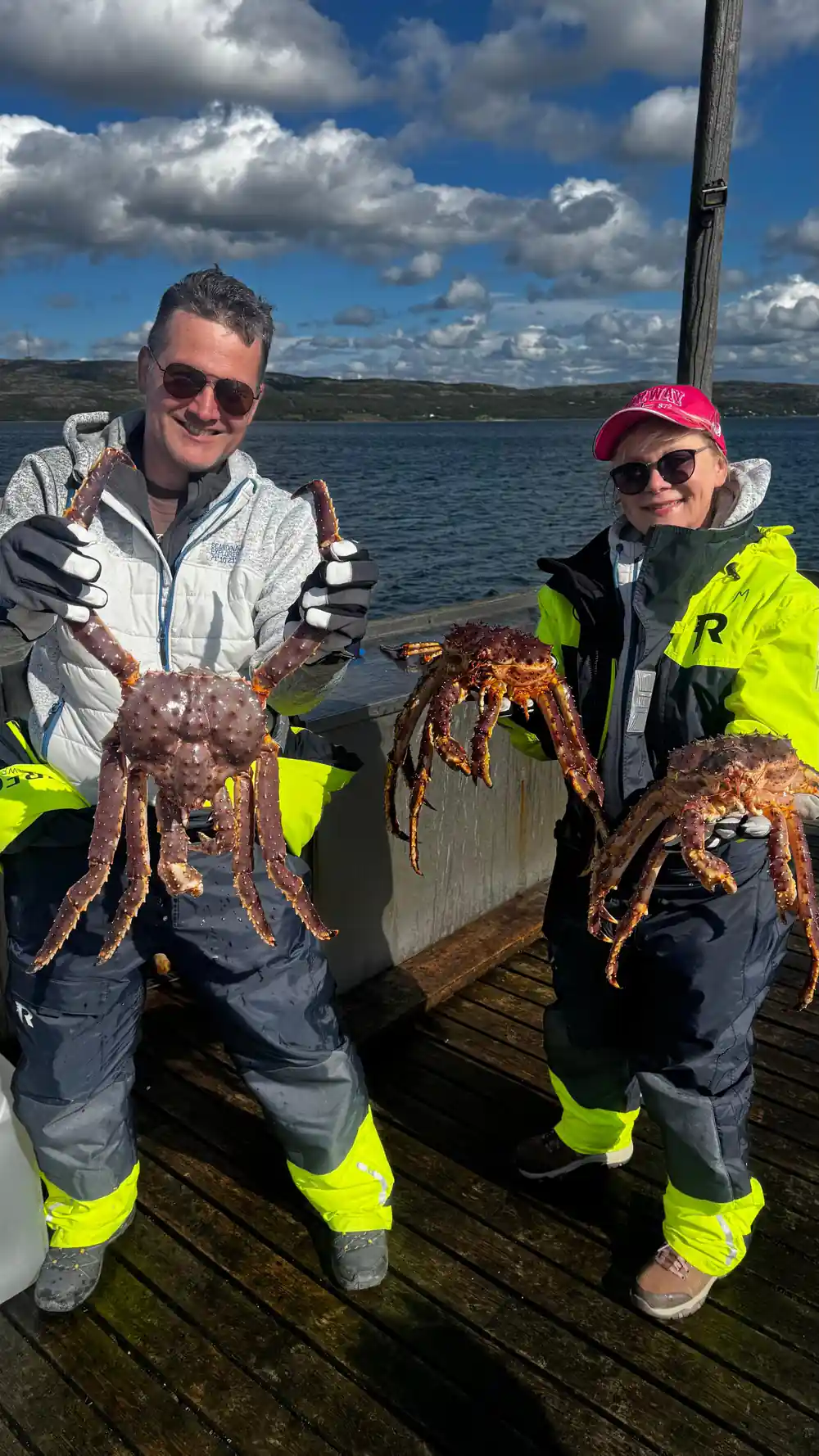
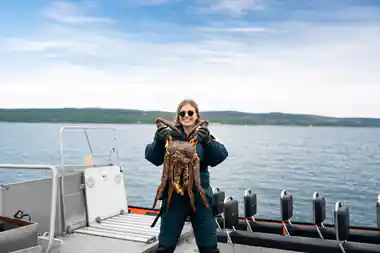
Then the pots. They come up over the side of the boat, and you help pull them, which is the sentence that matters. This is not a crew member hauling while passengers photograph. The hauling is shared, and what comes up is a heavy pot with live king crab moving inside it.
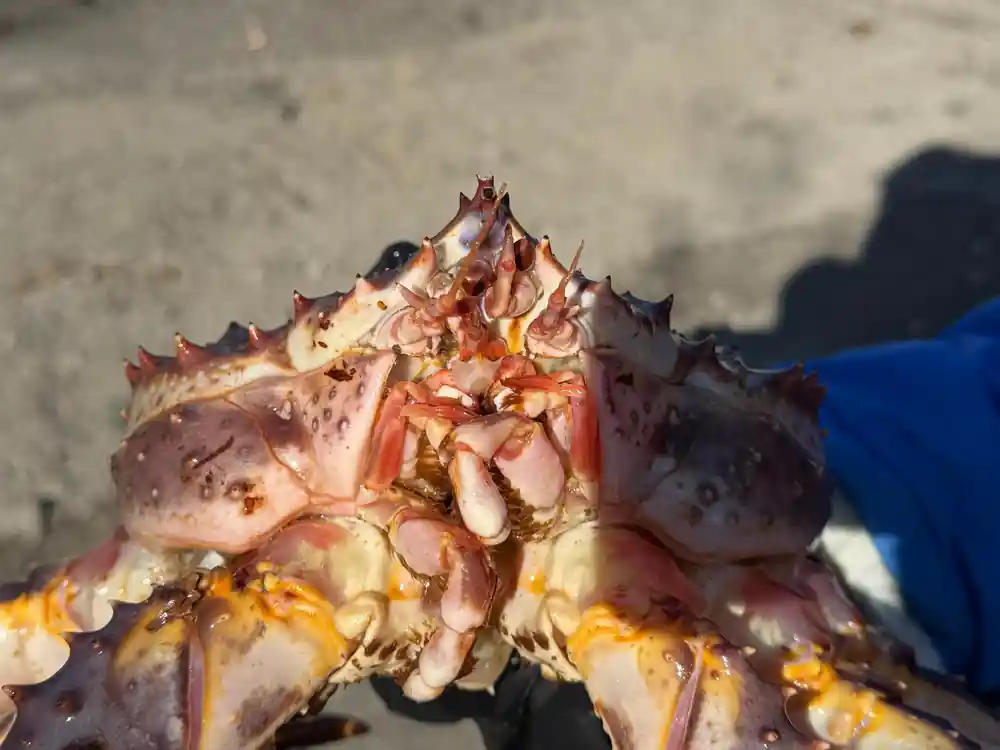
The animals themselves are the surprise. A red king crab is much larger than most people picture, with a leg span that makes holding one a two-handed job, and they are alive and shifting when they arrive on deck. Handling one, with the guide showing you how, is the moment the trip exists for.
Across the water and into the boathouse
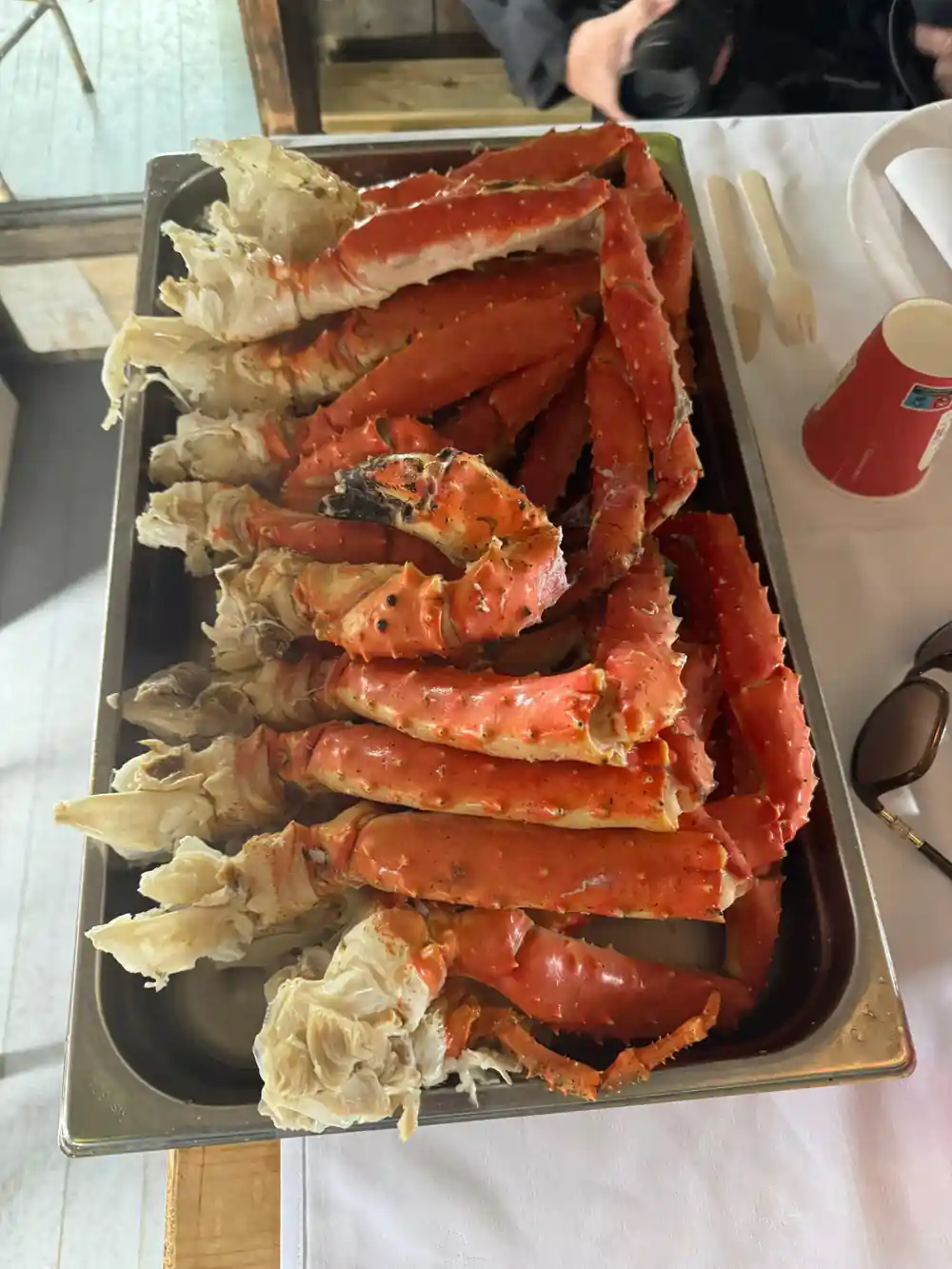
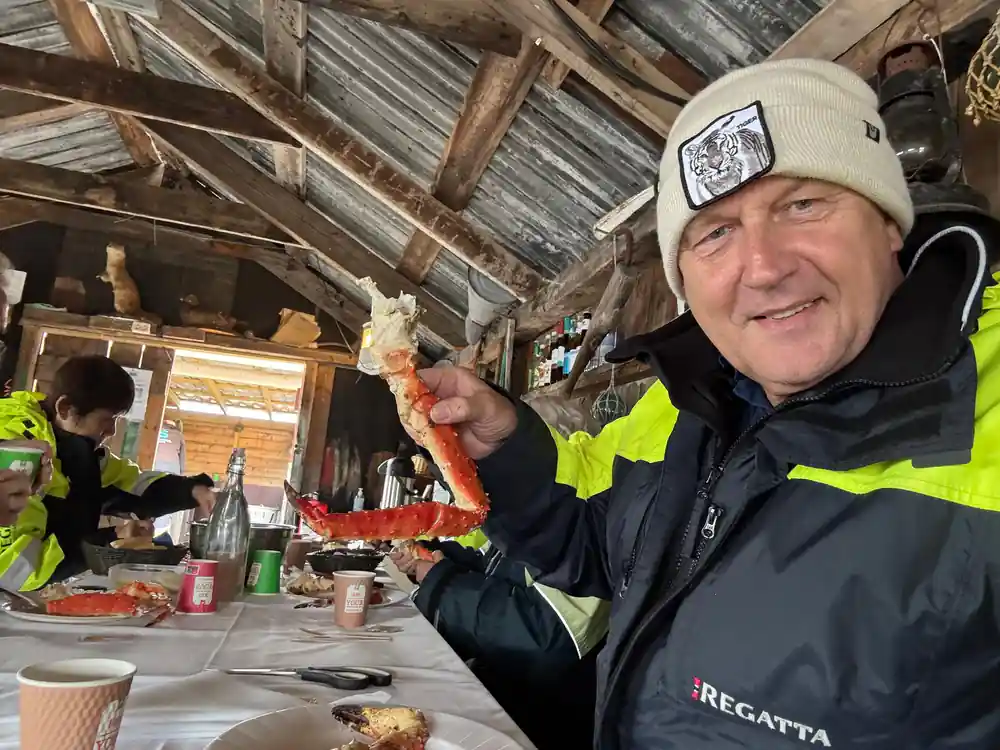
The catch does not get cooked on the boat. It crosses the fjord with you to a rustic boathouse on the far side, where the crabs are prepared while you are given coffee or tea. Then the legs come out split, with bread, butter, mayonnaise and lemon, and somebody shows you how to get the meat out in one piece.
This is the part of the day where the pace changes deliberately. The boat is fast and cold and loud; the boathouse is warm and slow. Finishing an afternoon out on Arctic water by sitting down at a table and eating what you caught an hour earlier is a much better ending than coming straight back to a pier and dispersing. Then the transfer takes you back to your hotel.
Three hours from your hotel and back
from US$278Reserve now & pay later
Good to know first
How long is the whole thing?
How much of it is spent on the boat?
Do I actually help pull the pots?
When does the meal happen?
Is there time to take photographs?
What is the last thing that happens?
The first stage
Collection from your hotel
A driver collects you in Kirkenes. The run out to the pier doubles as an introduction to the town, which guests regularly single out as worthwhile.
Suits and the briefing
Floating overalls, a life vest, mittens and a balaclava are issued, and the safety briefing happens before anyone steps aboard the RIB.
The working fishing boats
The RIB calls at local boats, where the guide explains how the fishery works and what a crab pot actually does down on the seabed.
The wartime battle stations
The boat runs out to the WW2 positions in the fjord and the guide explains what they were built to cover and what is still visible.
Hauling the pots
The pots come up over the side and you help. This is the part everybody books for, and it is genuinely hands-on rather than a demonstration.
The boathouse meal
The catch crosses to a boathouse on the far shore and is cooked there while you have coffee, then the legs come out on the table.