In a nutshell
- The red king crab is a North Pacific animal that reached the Barents Sea and turned up on the Norwegian side at its far eastern corner first.
- Because the crab arrived in the east, eastern Finnmark is where the Norwegian fishery grew up and where it is still concentrated.
- Norway runs the fishery under a quota in the east, deliberately limiting the catch, and treats the crab differently further west.
- The trip calls at working fishing vessels before it does anything else, which is the point of doing this in Kirkenes.
An animal that was not supposed to be here
The starting fact about king crab fishing in Norway is that the animal is not Norwegian. The red king crab belongs to the North Pacific, around Kamchatka and the Bering Sea, and it reached the Barents Sea in the twentieth century by way of a Soviet programme to establish it there as a food resource. It took hold, and then it did what a successful species does, which is spread.
It spread west along the coast, and because it was arriving from the east, the first Norwegian waters to hold it in numbers were the ones at the far eastern end of the country. That is the whole reason Kirkenes matters to this story. The town did not choose to become the centre of a king crab fishery; it was simply the first place in Norway where there were enough of them to catch.
Why the fishery is concentrated here
Once the crab was established in eastern Finnmark, everything else followed. The boats were here, the landing infrastructure was built here, and the expertise accumulated here. Kirkenes and the fjords around it became the working heart of a fishery that did not exist a lifetime ago.
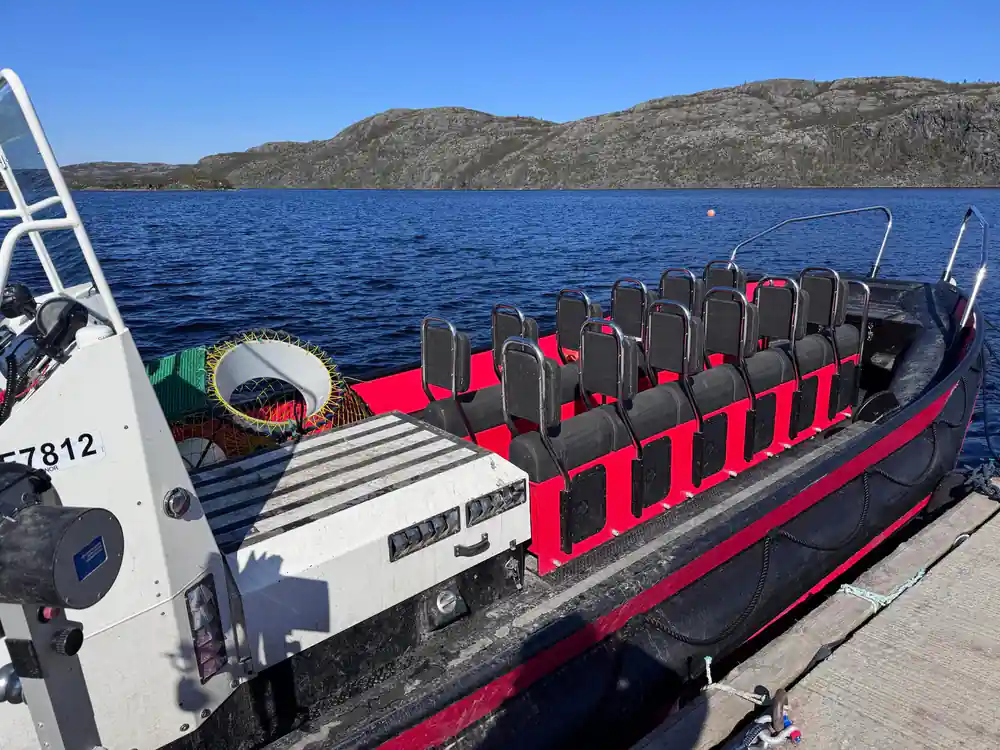
That is what you are looking at when the safari calls at local fishing boats before it does anything else. These are not decorative vessels moored for the benefit of visitors. They are the working end of a real fishery in the town where that fishery is based, which is a materially different thing from a crab trip run somewhere the crab merely happens to be present.
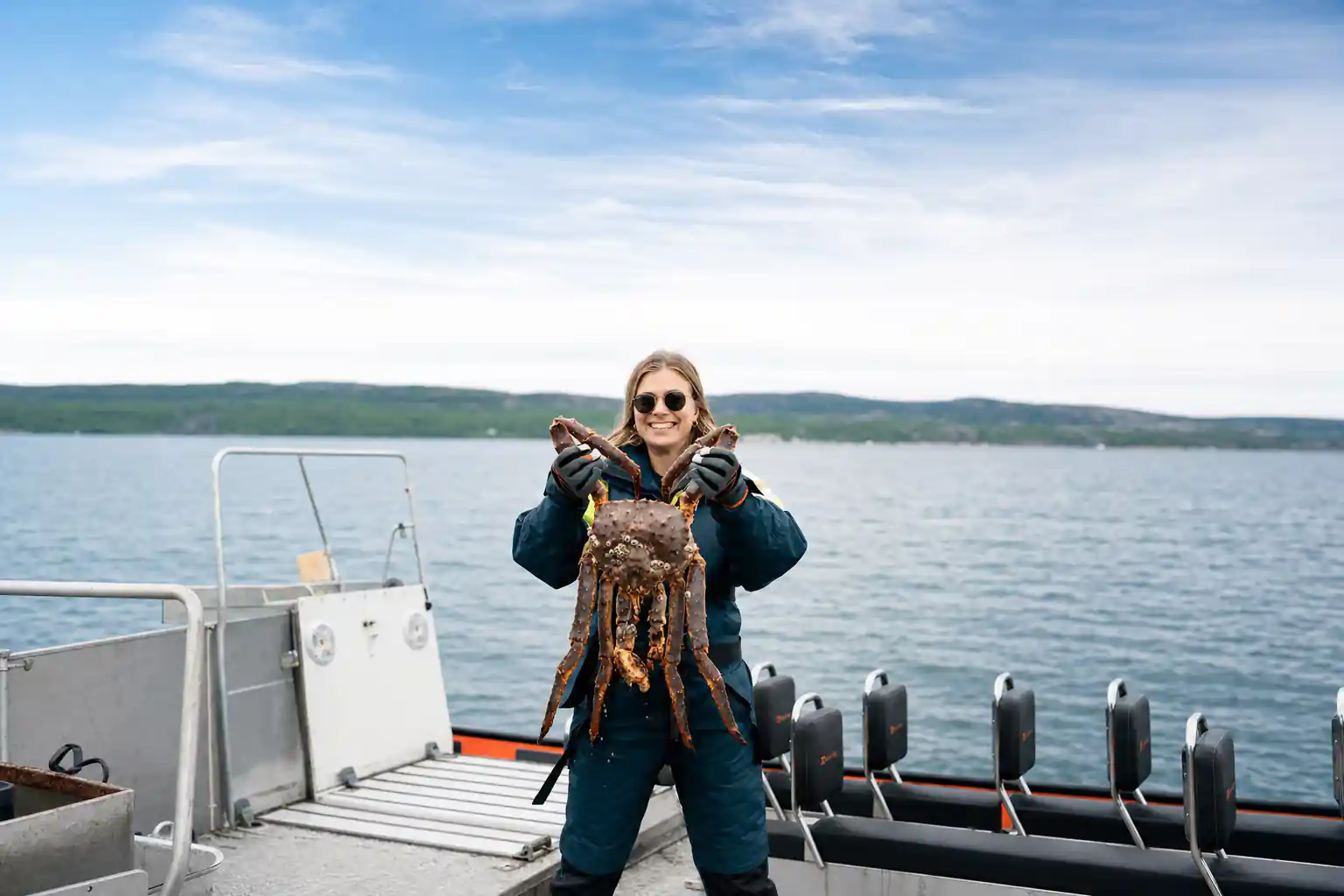
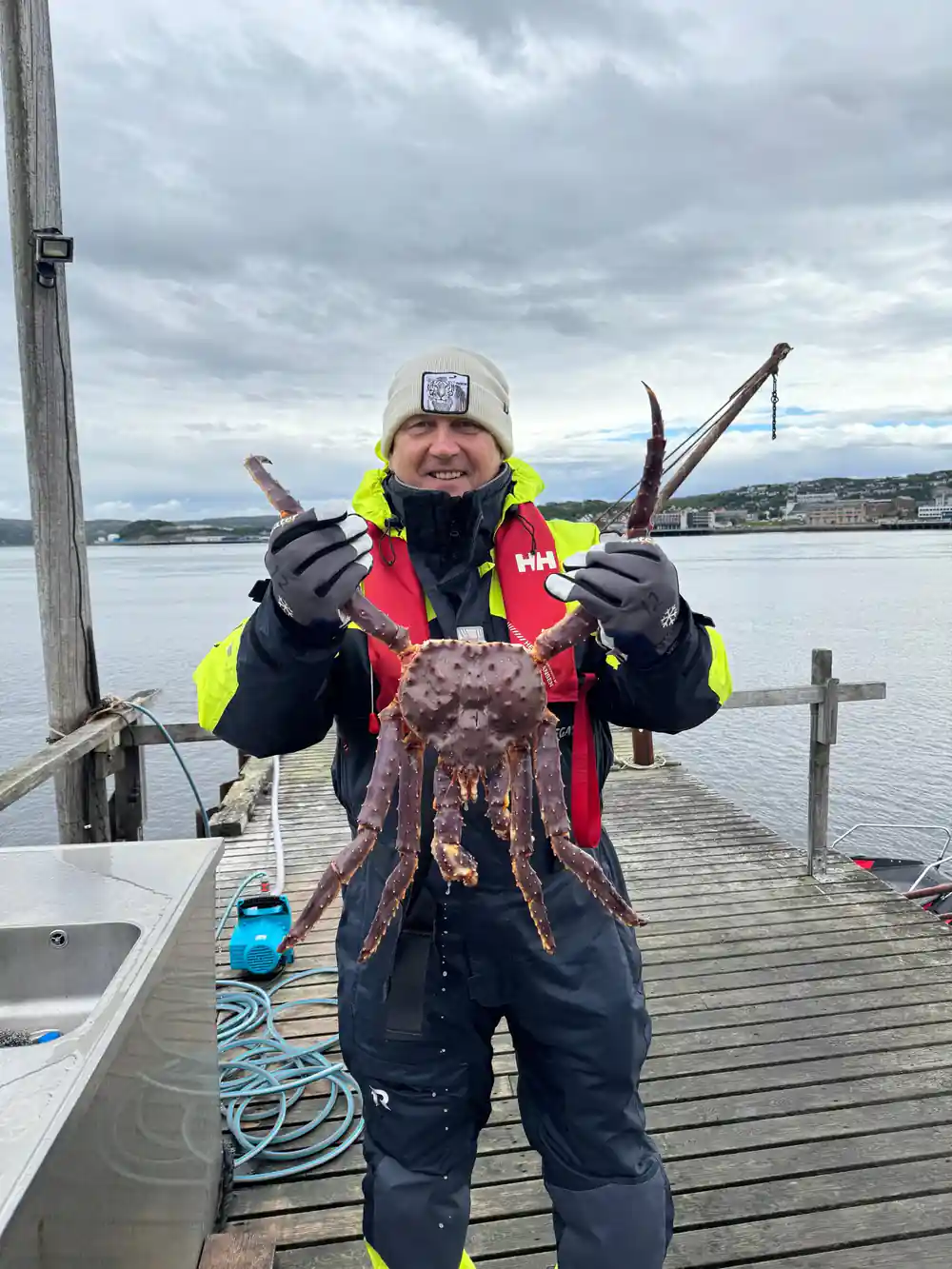
A red king crab brought up from the seabed of the Kirkenes fjord
What a crab pot actually does
A pot is a deceptively simple object and its logic only becomes obvious when somebody explains it. It is a frame with netting over it, baited, weighted, and lowered to the seabed on a line with a marker float above. The crab walks in to get at the bait and cannot easily find its way back out. Then it waits, and the pot is hauled after a soak of hours or days.
What makes this a good way to catch king crab rather than a crude one is selectivity. A pot catches what walks into it on the seabed, which is where king crab lives, and what it catches is alive when it comes up. That means undersized animals or ones that should not be taken go back over the side in good condition, which is not true of every fishing method.
The quota, and the line that divides the coast
Norway manages king crab in two quite different ways, and understanding that explains most of what you will hear on the water. In the east, around Kirkenes and the Varanger area, the crab is treated as a valuable resource and the fishery is limited by quota: a controlled catch, allocated among boats, deliberately kept at a level that sustains it.
West of a defined boundary, the policy inverts. There the crab is treated as an invasive species that the country would rather not see spread further, and the aim is suppression rather than sustainable harvest. It is an unusual arrangement, and a reasonable one: the same animal is an asset where it has become an established part of the economy and a problem where it is still advancing into new ground.
Pacific
The red king crab is not native here. It reached the Barents Sea from the North Pacific and has spread along the Norwegian coast ever since.
Why an invasive animal is worth protecting
This is the tension at the centre of the whole subject and it is worth sitting with rather than resolving neatly. The red king crab is a large, long-lived predator that was introduced to a sea it did not evolve in, and it eats its way across the seabed as it goes. Ecologically, its arrival is not good news for what was living there first.
Economically, it has become one of the most valuable things landed on this coast, and eastern Finnmark is a remote region with limited industries. So Norway does both things at once: protects the fishery where it supports towns like this one, and works to stop it advancing further west. Whether that balance is right is a genuine question, and one the people who work these boats have views about.
How the visitor trip relates to the real thing
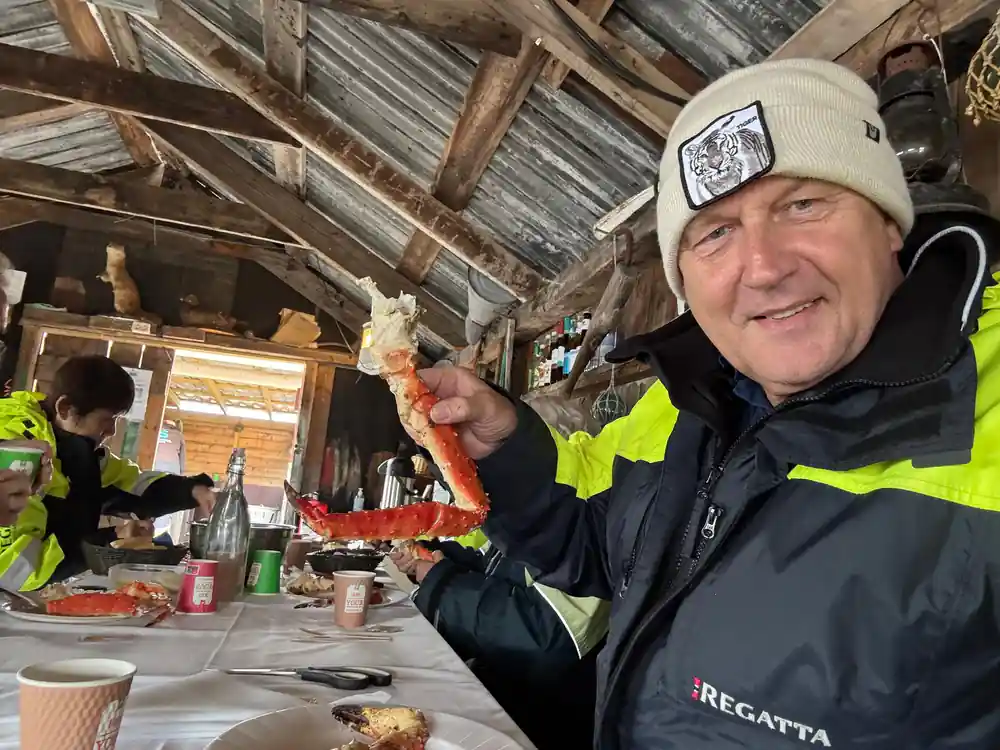
Honestly, and this is worth being clear about. A three-hour safari is not commercial fishing, and nobody is pretending it is. The pots you help haul are set for this purpose, the quantity is what a small group will eat, and you are not going out for a week in weather that a commercial boat would work through.
What it is instead is a real version of the method, in the real place, with people who know it. The pot is the same design, set on the same seabed, catching the same animal, and explained by someone who lives from this coast. The difference from the commercial fishery is scale and duration, not authenticity, and that is a more honest description than most visitor experiences can offer.
What happens to what is not eaten
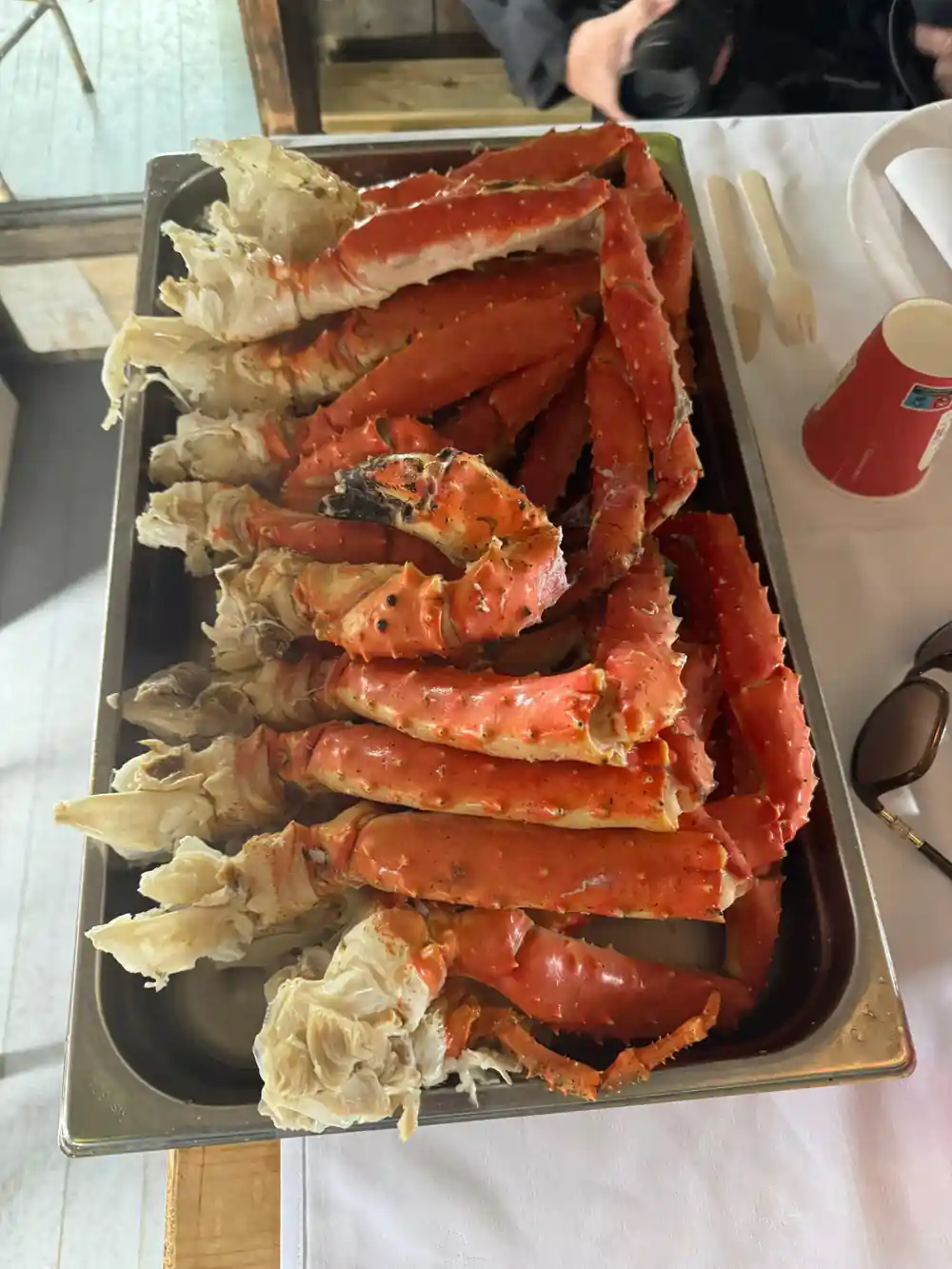
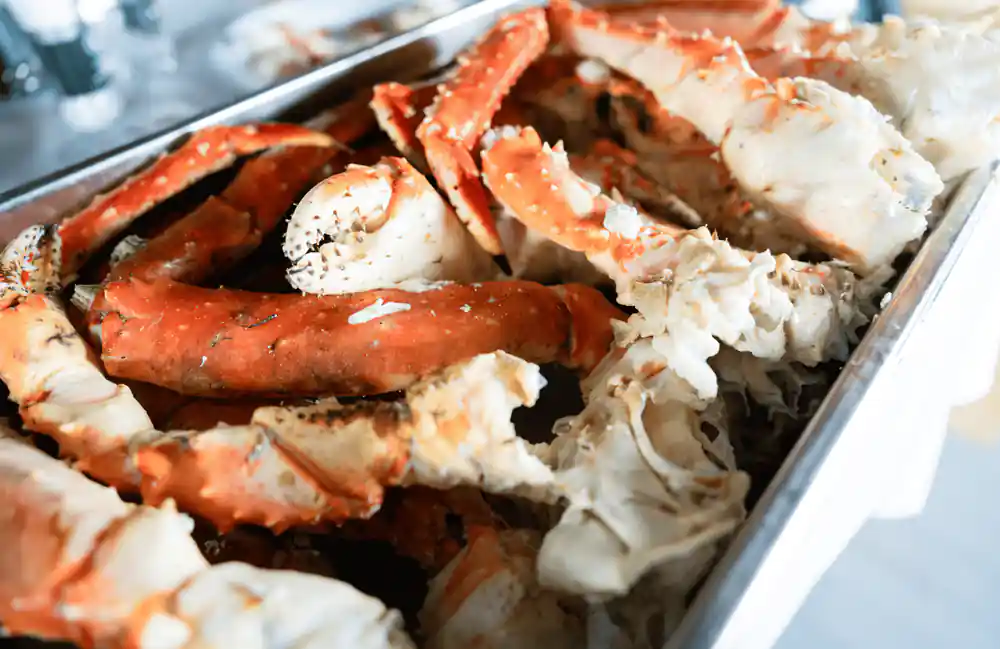
A reasonable question, and the answer is prosaic. The catch on a safari is sized to the group, so the situation of a large surplus does not really arise. What comes up is what gets cooked at the boathouse, and king crab is a substantial animal, so a small number of them goes a long way among a boatload of people.
The wider answer, for the fishery rather than the trip, is that Norwegian king crab is a premium export. Much of what is landed commercially in eastern Finnmark leaves the country alive or freshly processed, bound for restaurants a long way from the Barents Sea. Eating it fresh on the shore where it was caught is, in that sense, the rarer way to have it.
See the fishery from the water
from US$278Reserve now & pay later