In a nutshell
- A rigid hull with inflated tubes around it and no cabin, so you are out in whatever the weather is doing for the whole trip.
- Floating overalls, a life vest, mittens and a balaclava all come with the trip and go on over your own clothes at the pier.
- The point of a RIB is speed and closeness to the water, which is what gets you out to the pots and back inside three hours.
What a RIB actually is
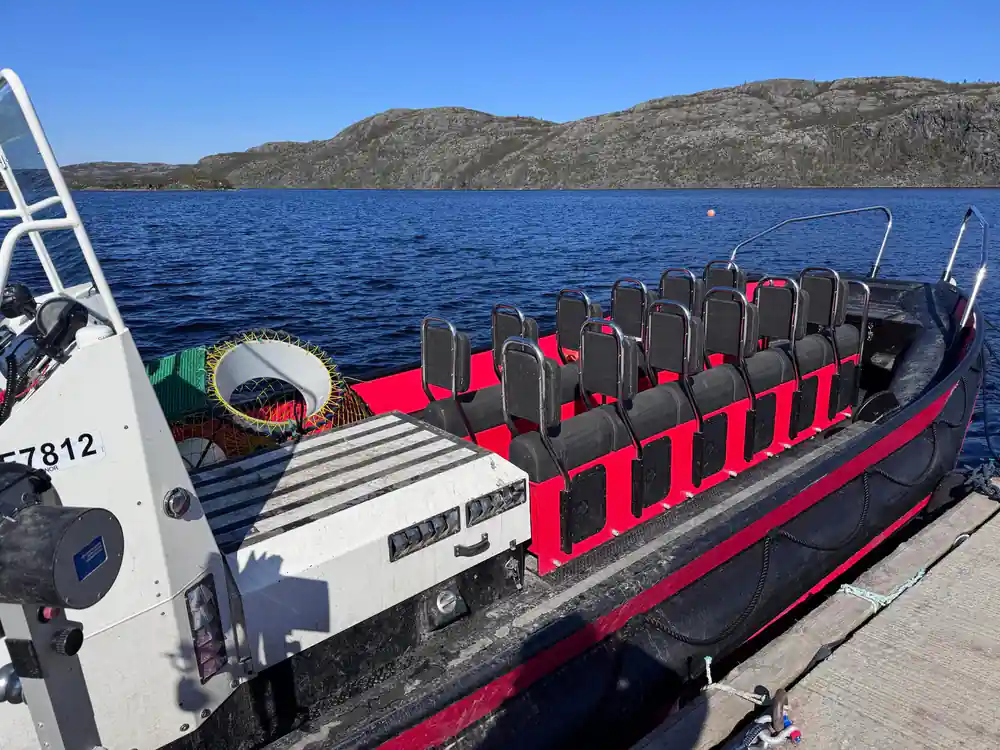
RIB stands for rigid inflatable boat, and the name describes the construction exactly. There is a hard hull underneath, shaped like any other fast boat, and a collar of inflated tubes running around the outside of it. The tubes are what make the thing so stable: they sit at the waterline and resist the boat leaning, which is why a RIB can be small and fast without feeling precarious.
The consequence for a passenger is a boat that is much livelier than a cruise vessel and much steadier than its size suggests. It also has no cabin, no saloon and nowhere to go indoors. What you get instead is an open deck, an unobstructed view in every direction, and the water about a metre below your elbow.
How fast, and how wet
Fast enough that the fjord goes past properly, which is the whole reason the operator uses one. A three-hour trip that includes a stop at the working boats, a stop at the battle stations, hauling the pots and a meal on shore only works because the boat covers the distances quickly.
How wet you get depends entirely on the day. In a flat calm you will barely notice the water at all. In a chop you will feel spray, and the suit is there precisely so that this is a detail rather than a problem. Nothing about the fjord at Kirkenes is open ocean, so this is not the kind of RIB ride that leaves people soaked and clinging on.
What you wear and why
The flotation suit is the single most important piece of the trip. It is a full-body overall with buoyancy built into it, so it is both your warm layer and your safety equipment, and it goes on over whatever you are already wearing. Mittens and a balaclava come with it, which sounds excessive for July until the boat is at speed and you understand that wind chill on open water does not care what the thermometer on shore says.
Underneath, dress as you would for a cool day rather than a warm one. Long sleeves and long trousers, and comfortable shoes with a bit of grip, because you will be stepping between a pier and a moving boat and standing on a wet deck. Leave the good coat behind; the suit goes over everything anyway.
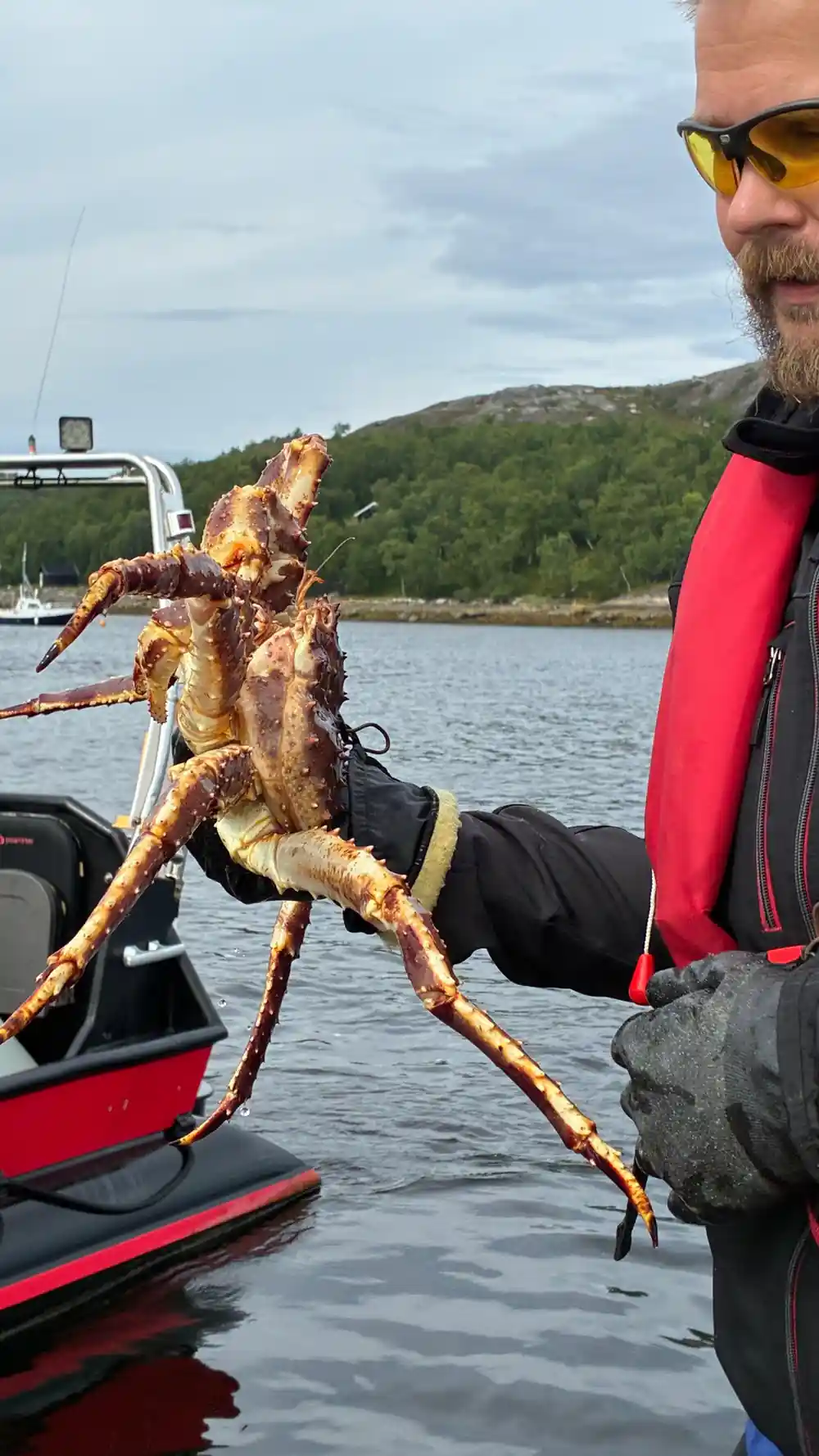
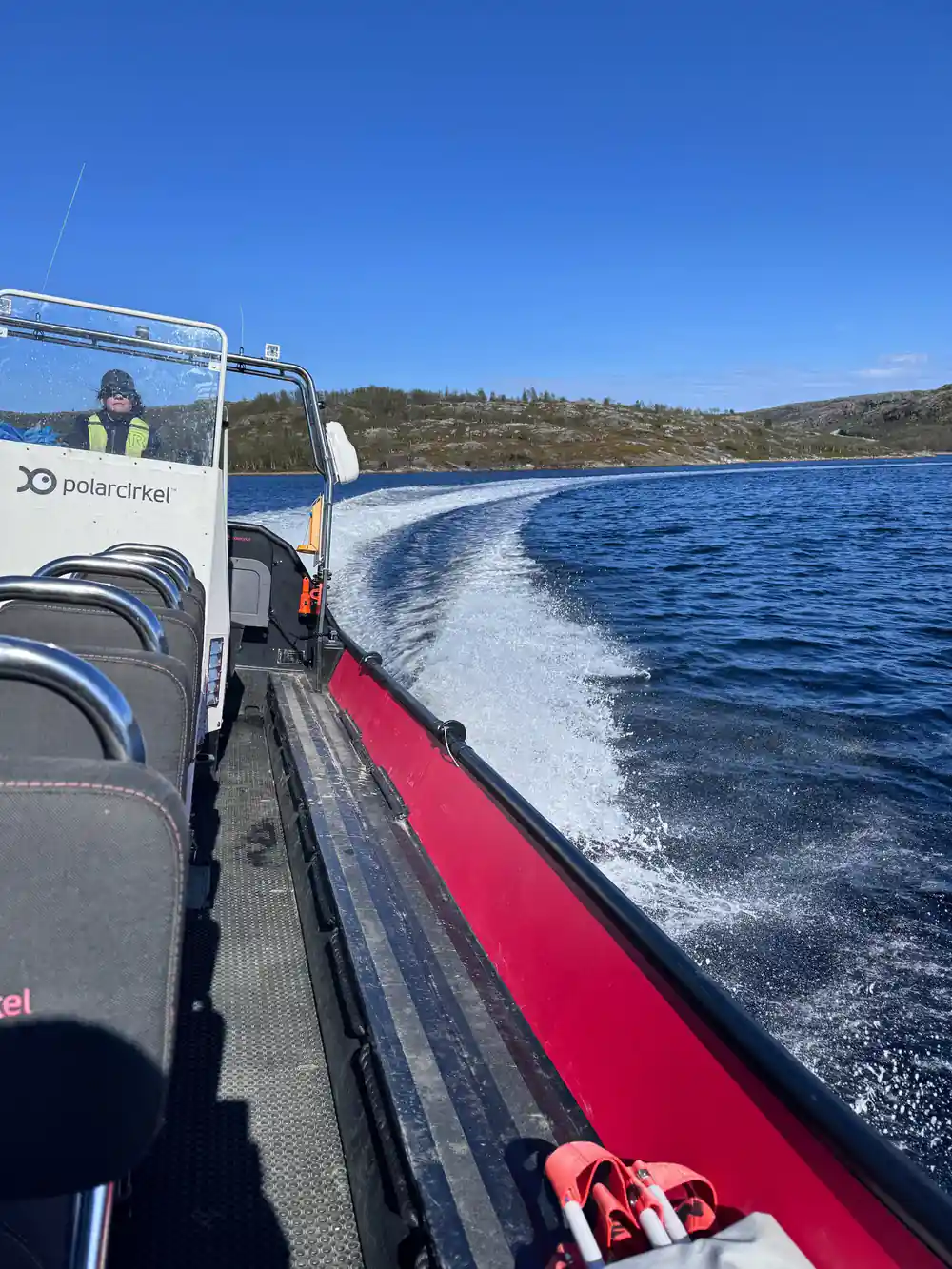
The RIB running out across the Kirkenes fjord with passengers aboard
Where you sit and what you hold
The seating is individual rather than a bench. You sit into a moulded seat with a frame in front of you to hold, which is the arrangement that makes a fast boat comfortable rather than alarming. Your job while the boat is moving is to stay seated and keep a hand on the frame, and everything else is the guide's problem.
When the boat stops to work the pots, people stand up and move around, and that is when the deck matters. It is open, it is wet, and there is a rail. Anyone steady on their feet will find this straightforward. Anyone who is not should think about it honestly before booking, because there is no seated alternative once the pot is coming aboard.
Cameras, phones and the wind
A phone is fine and everyone uses one, but a wrist strap or a zipped pocket is worth having, because a dropped phone on an open boat goes into the fjord rather than onto a carpet. The mittens make a touchscreen awkward, which is a small thing that catches people out at exactly the moment they want a photograph of a crab.
For a proper camera, the same logic applies with more force. Something you are happy to have spray on, and a strap around your neck rather than in your hand. The light in a Finnmark summer is very good for most of the day and remarkably good in the late evening, so it is worth the small amount of preparation.
Why a RIB rather than a bigger boat
There is a genuine trade being made here and it is worth understanding rather than assuming one answer is better. A larger vessel gives you an inside, a toilet, room to walk around, and a working deck with space for the pots and the catch. That is the right choice for a longer trip in colder months.
A RIB gives you speed, which buys time, and it gives you proximity. On a three-hour summer trip in a sheltered fjord, those are worth more than a saloon you would not use. It also keeps the group small, which every one of this operator's reviews mentions as one of the better parts of the day.
A note on the fjord itself
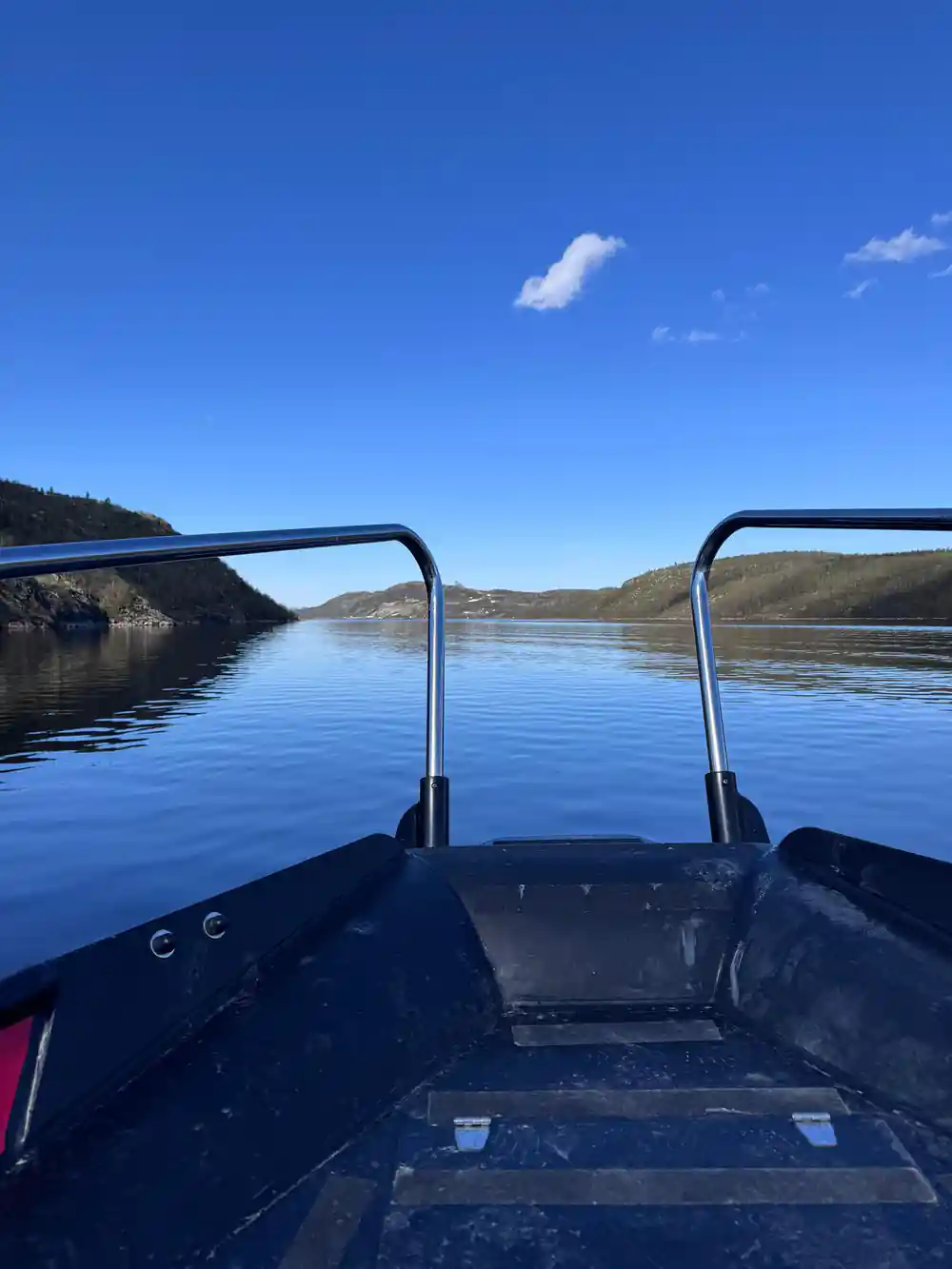
It is worth saying what kind of water this is, because the phrase Norwegian fjord conjures the western coast: sheer cliffs, waterfalls, a channel so deep and narrow that a ship feels small in it. The Varanger country around Kirkenes is nothing like that. The land is low and rolling, scraped flat by ice and then left bare, and the water is broad and open with long views in every direction.
That geography is why the boat can be a RIB at all. Sheltered water without the funnelling winds of a steep western fjord makes for a forgiving ride, and the low shoreline is what lets you see the wartime positions from the water in the first place. It also makes the light extraordinary: with nothing high to block it, a summer evening this far north goes on for hours in a flat gold that photographs far better than it has any right to.
See the fjord from the RIB yourself
from US$278Reserve now & pay later