In a nutshell
- The crabs are prepared at a rustic boathouse across the fjord rather than on the boat, so the meal happens at a table under a roof.
- Legs are served with bread, butter, mayonnaise and lemon, which is how this part of Norway eats king crab and all it needs.
- Opening a king crab leg is a technique rather than a struggle, and somebody demonstrates it before you start.
Why the meal is not on the boat
The obvious way to run this trip would be to cook the catch on board, and the operator does not, which turns out to be the better decision. A RIB is an open boat with no galley and no shelter. Eating on one in a Finnmark breeze would mean balancing a plate on your knees in the wind, and king crab deserves better than that.
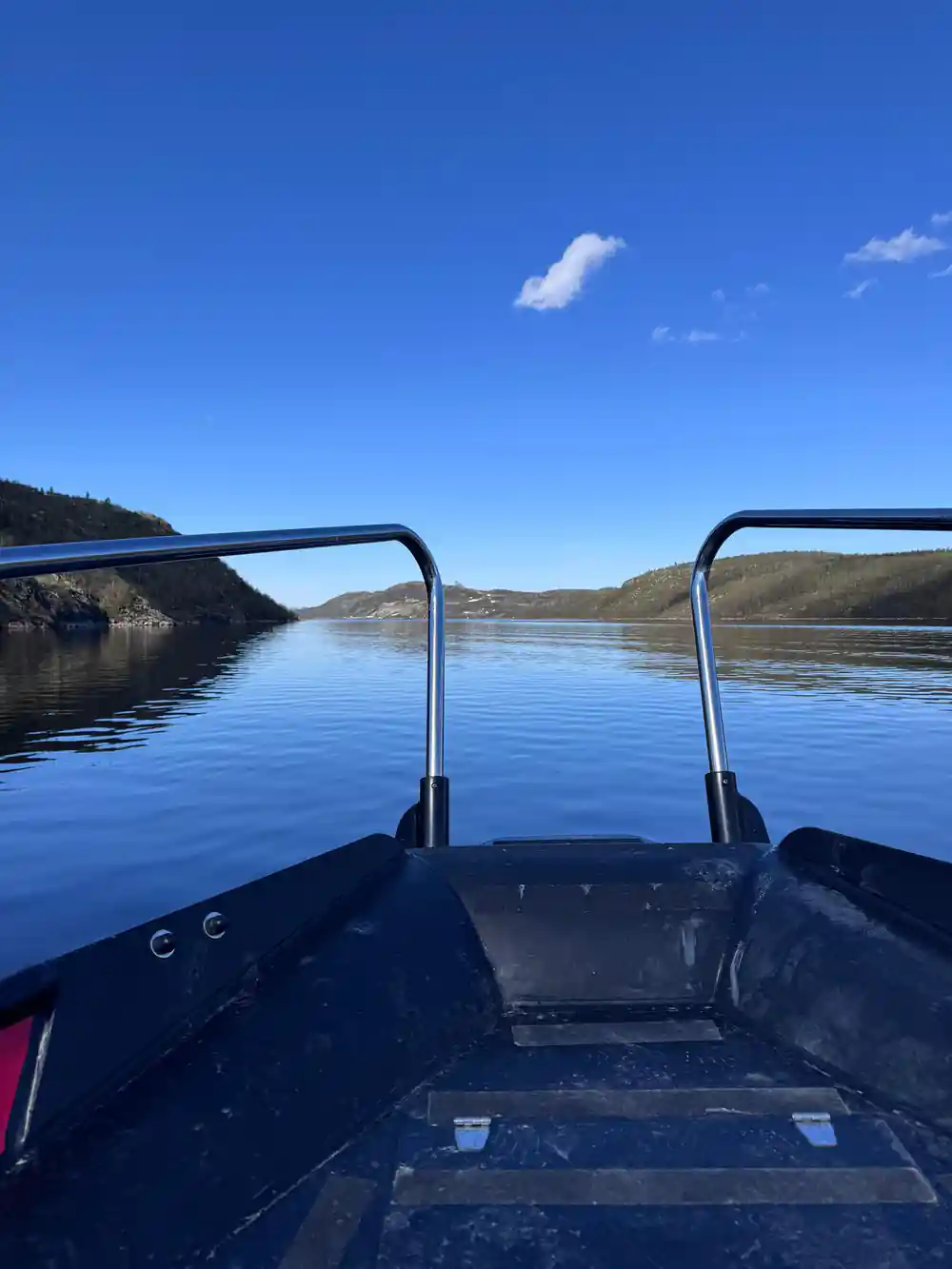
So the catch comes across the fjord with you to a boathouse on the far shore, and the meal happens there. That gives you a table, a roof, somewhere to put your elbows and enough time to eat properly rather than quickly. It also splits the trip into two clearly different halves, which is part of why three hours feels longer than it sounds.
What Northern Norwegian style means
It means restraint. The legs are served with bread, butter, mayonnaise and lemon, and that is essentially the whole accompaniment. There is no sauce built to compete with the crab, no elaborate presentation and nothing that needs explaining. The point of the phrase is that this is how the coast eats its own catch rather than how a restaurant elsewhere would dress it up.
It is the right call, because king crab has a particular sweetness that is easy to bury. The meat is firm, faintly sweet and much less briny than most shellfish, and a strong sauce would simply write over it. Butter and lemon exist to lift it slightly. The mayonnaise is there for the people who want something richer, and the bread is there to stop the whole thing being unrelieved protein.
How to open a leg
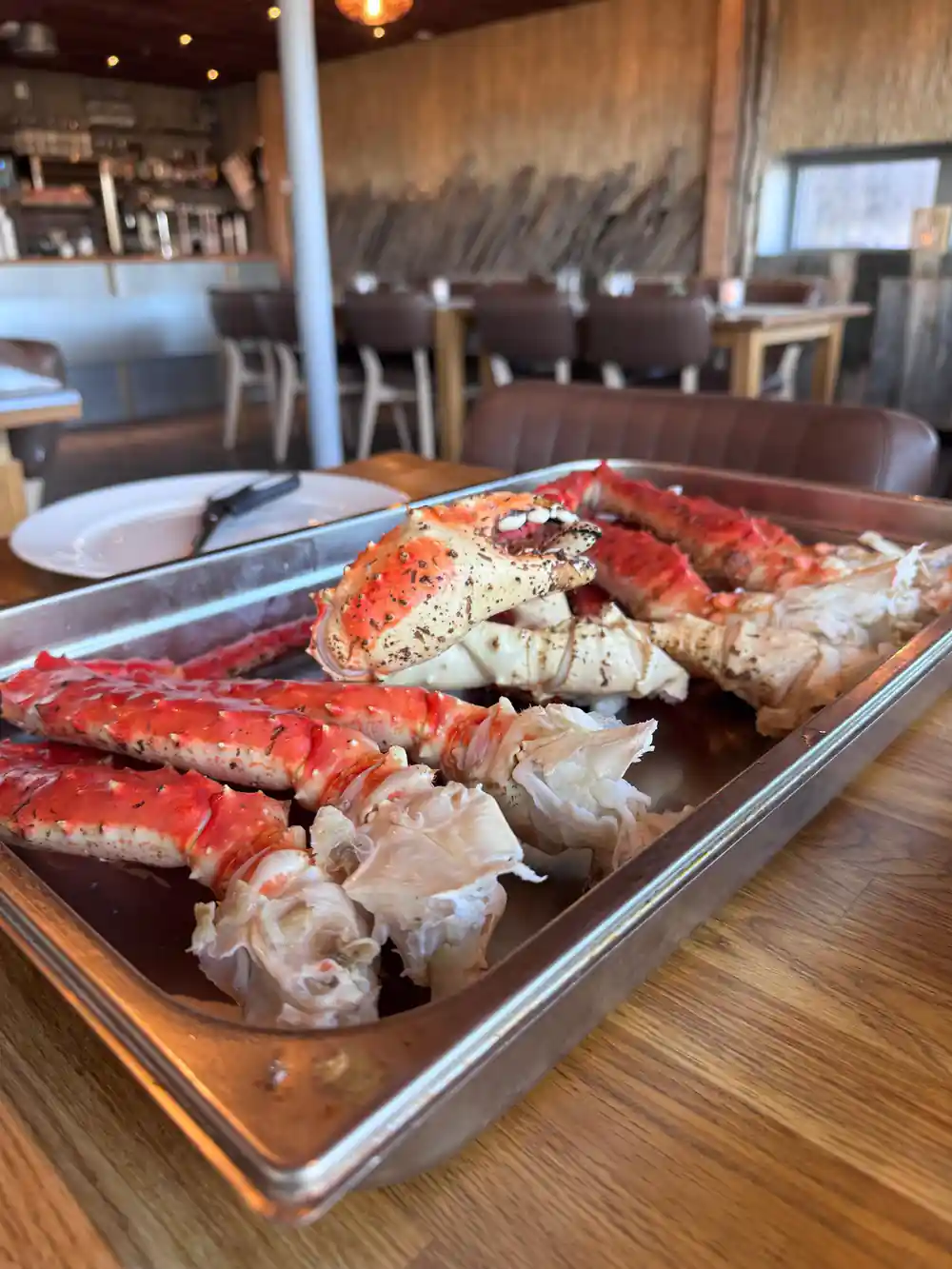
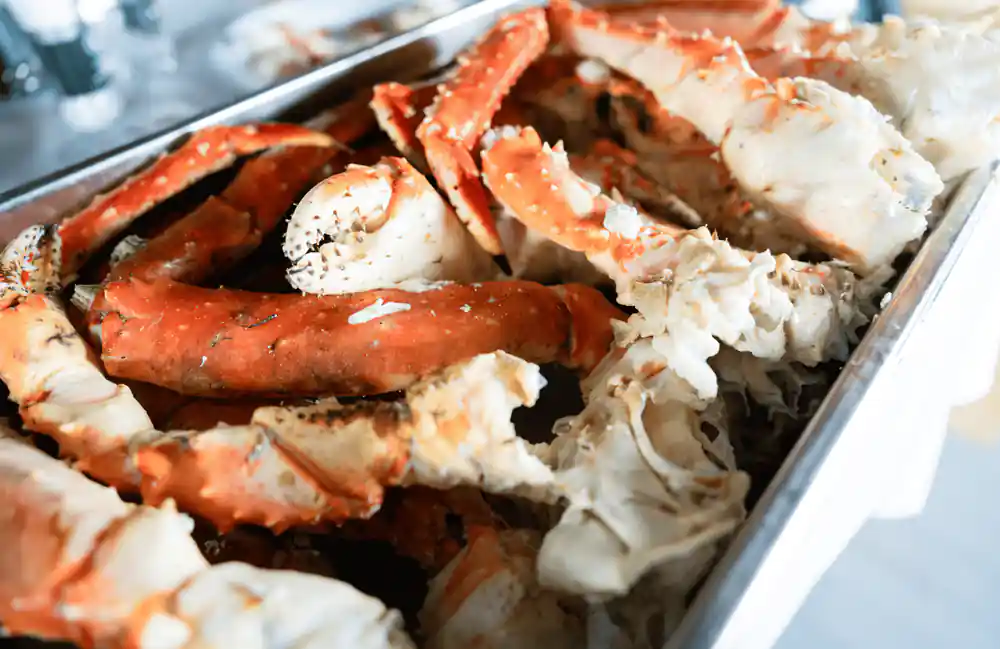
This is the part people quietly worry about and it is genuinely easy once shown, which is why somebody shows you. The legs arrive already split along their length, which does most of the work: the shell has been opened for you and the meat inside comes out in one long piece rather than in fragments.
The technique is to work the meat out whole rather than picking at it. Knuckle joints are where the resistance is, and a bit of bending at the joint frees them. What you should not do is attack it as though it were a lobster claw needing to be cracked. It is a much more cooperative animal than it looks, and the spiky armour of the shell is misleading about the difficulty.
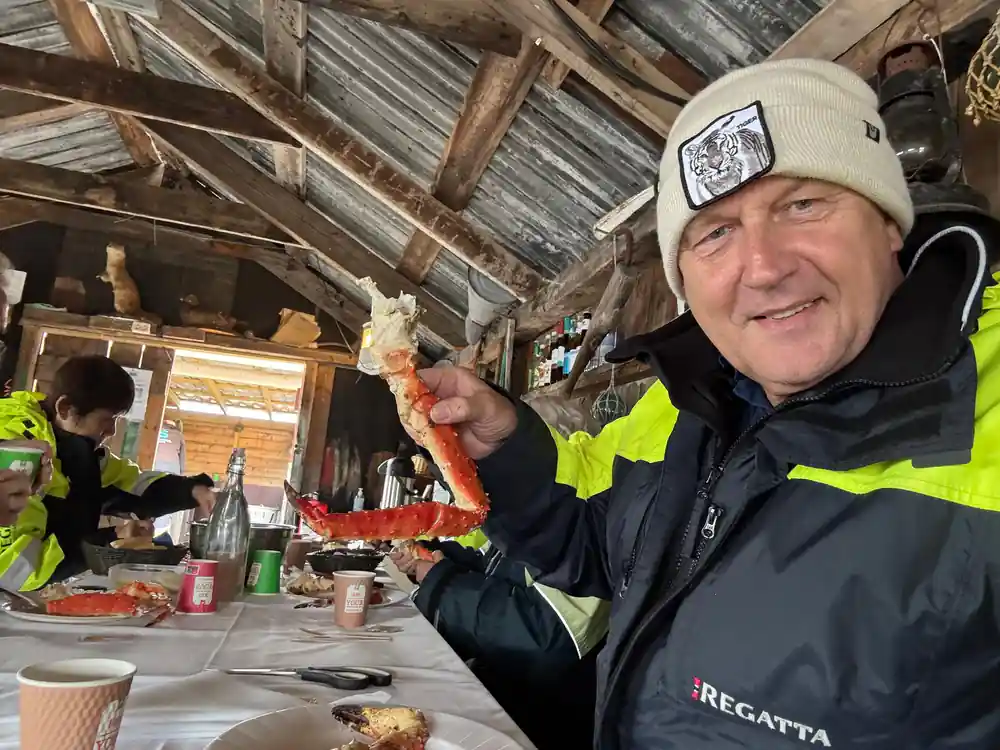
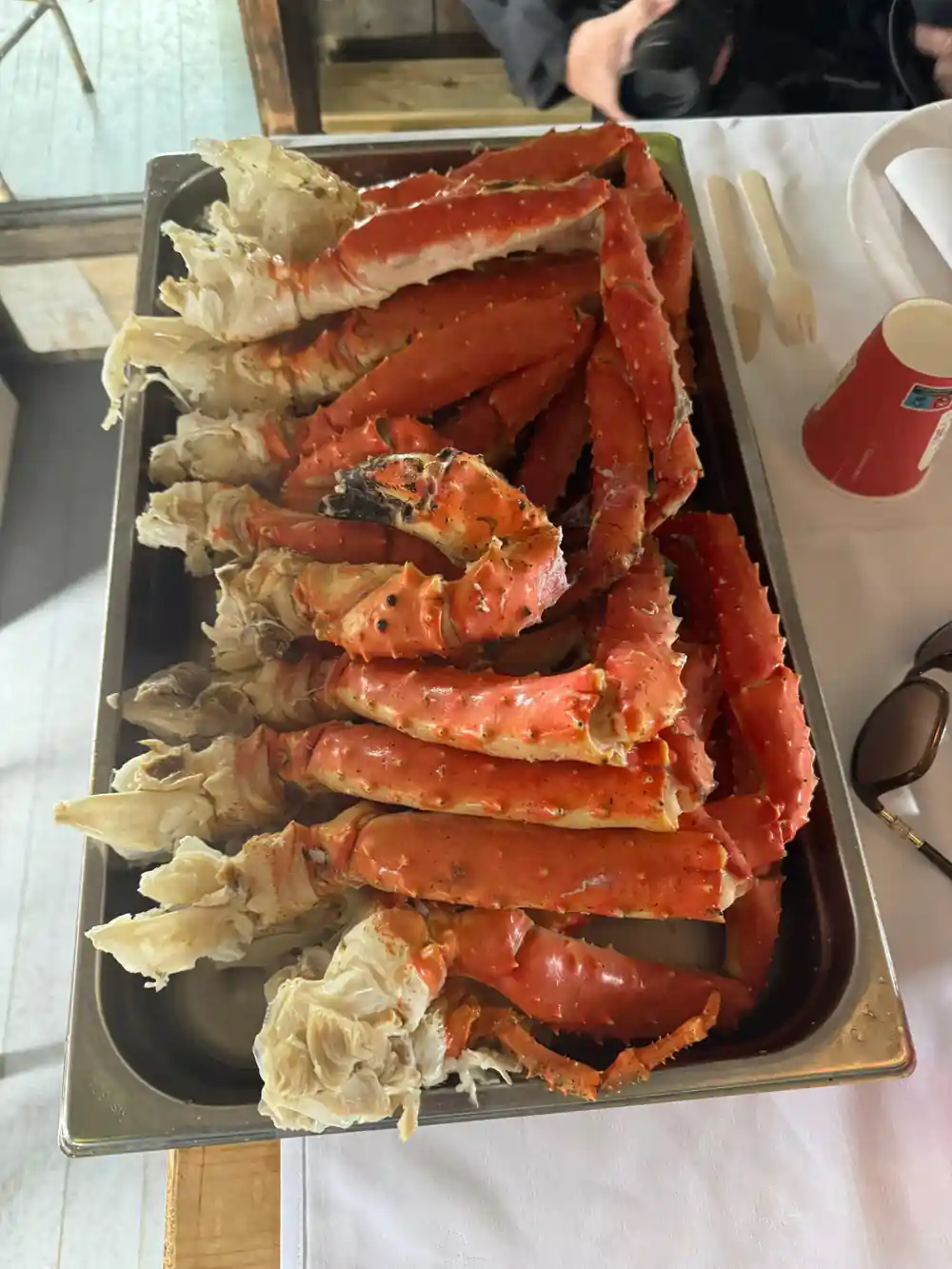
A tray of split king crab legs served in the boathouse across the fjord
How much there is
Enough. This is a meal rather than a tasting, and the photographs of what comes out of the kitchen show trays of split legs rather than a plated portion. A king crab is a substantial animal and the legs are the bulk of it, so a catch shared among a small group produces a real quantity of meat.
It is worth arriving hungry and worth not planning an early dinner afterwards. It is also worth knowing that this is rich food. King crab meat is lean rather than fatty, but a large amount of it with butter is filling in a way people underestimate when they are looking forward to it.
What there is to drink
Coffee or tea is served while the crabs are being prepared, which is the right thing at the right moment: you have come off an open boat, you are still in the suit, and the food is not ready yet. Additional drinks are available to buy at the boathouse for anyone who wants something else with the meal.
That distinction is worth being clear about. The hot drink while you wait comes with the trip. Anything beyond that is bought at the boathouse, so bring a card if you think you will want one.
If you do not eat shellfish
The honest answer is that the meal is built around king crab and there is no advertised alternative, so this is something to raise when you book rather than to discover at the boathouse. The operator is running a small group in a remote place and is far better placed to accommodate a request they knew about in advance.
The bread, butter and the accompaniments are on the table regardless, and coffee or tea is served while the crabs cook, so nobody is sitting there with nothing. But if shellfish is a genuine allergy rather than a preference, it is worth a message before booking to confirm what can be done.
The building itself
It is described as a rustic boathouse, and rustic here is accurate rather than a euphemism. This is a working structure on a working shoreline: timber, a roof, tables, and the equipment that goes with landing and handling a catch. It is not a restaurant with a view, and it would be a worse experience if it were.
Eating something you pulled out of the fjord an hour ago, in the building where the fjord's catch is handled, on the shore opposite the town, is most of the point. The setting does more for the meal than any amount of finish would.
Catch it, then sit down and eat it
from US$278Reserve now & pay later